
2026 Solo Commission, Devonport Regional Gallery, 21 March – 16 May 2026.
Documentation photos: Anna Abela. Photography assistant Mooning series: Ivett Dodd.
Available catalogues can be purchase via Devonport Regional Gallery.
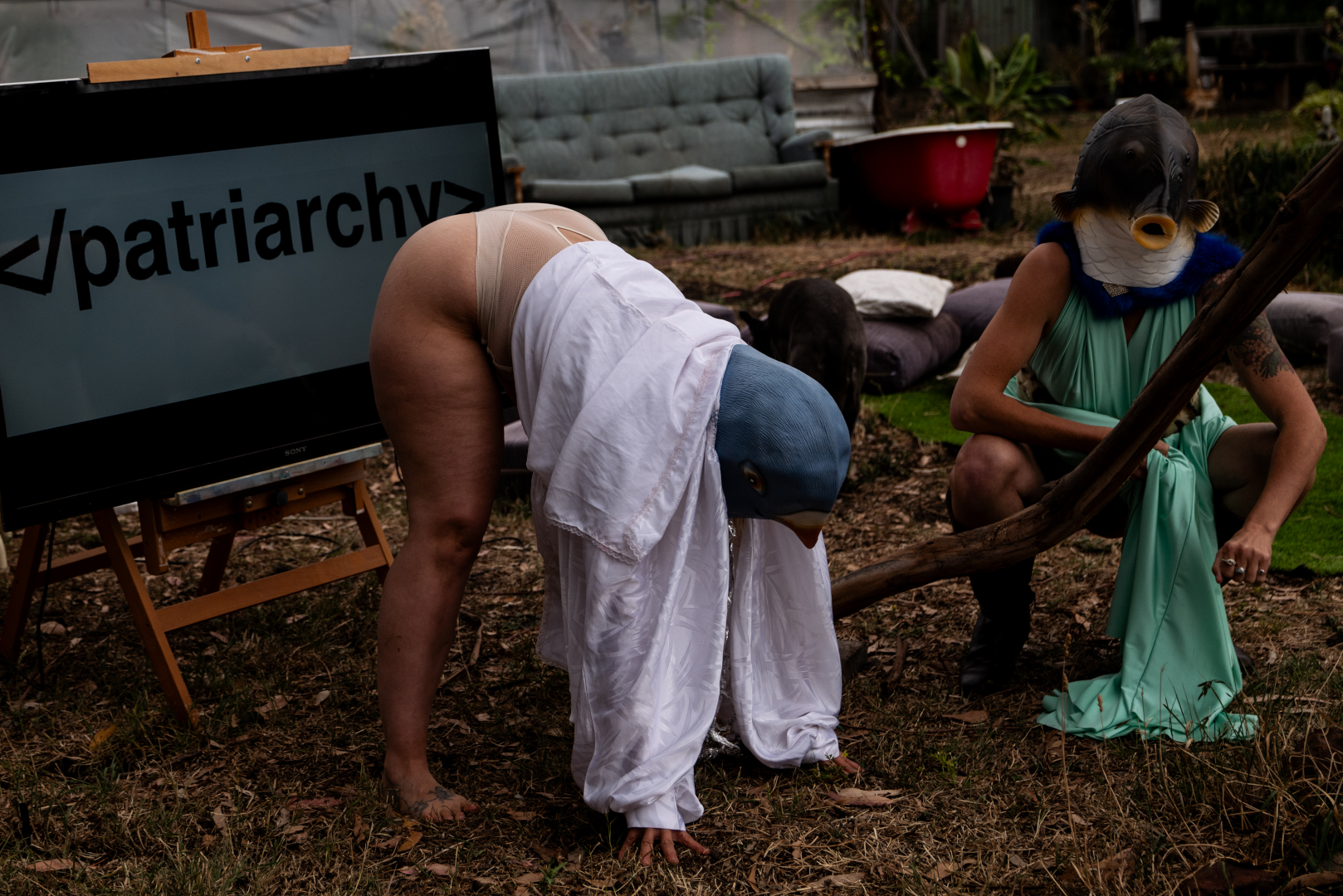
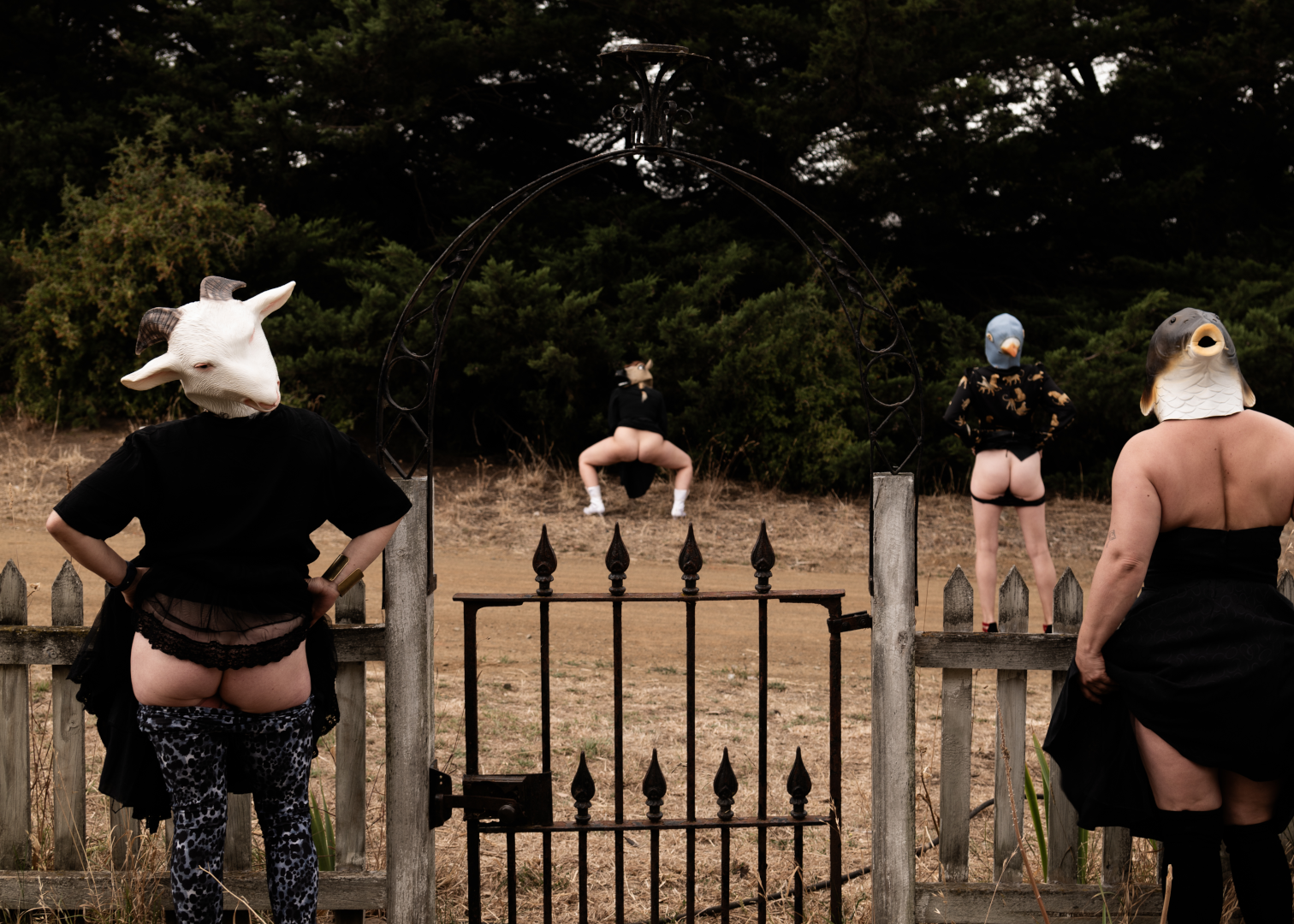
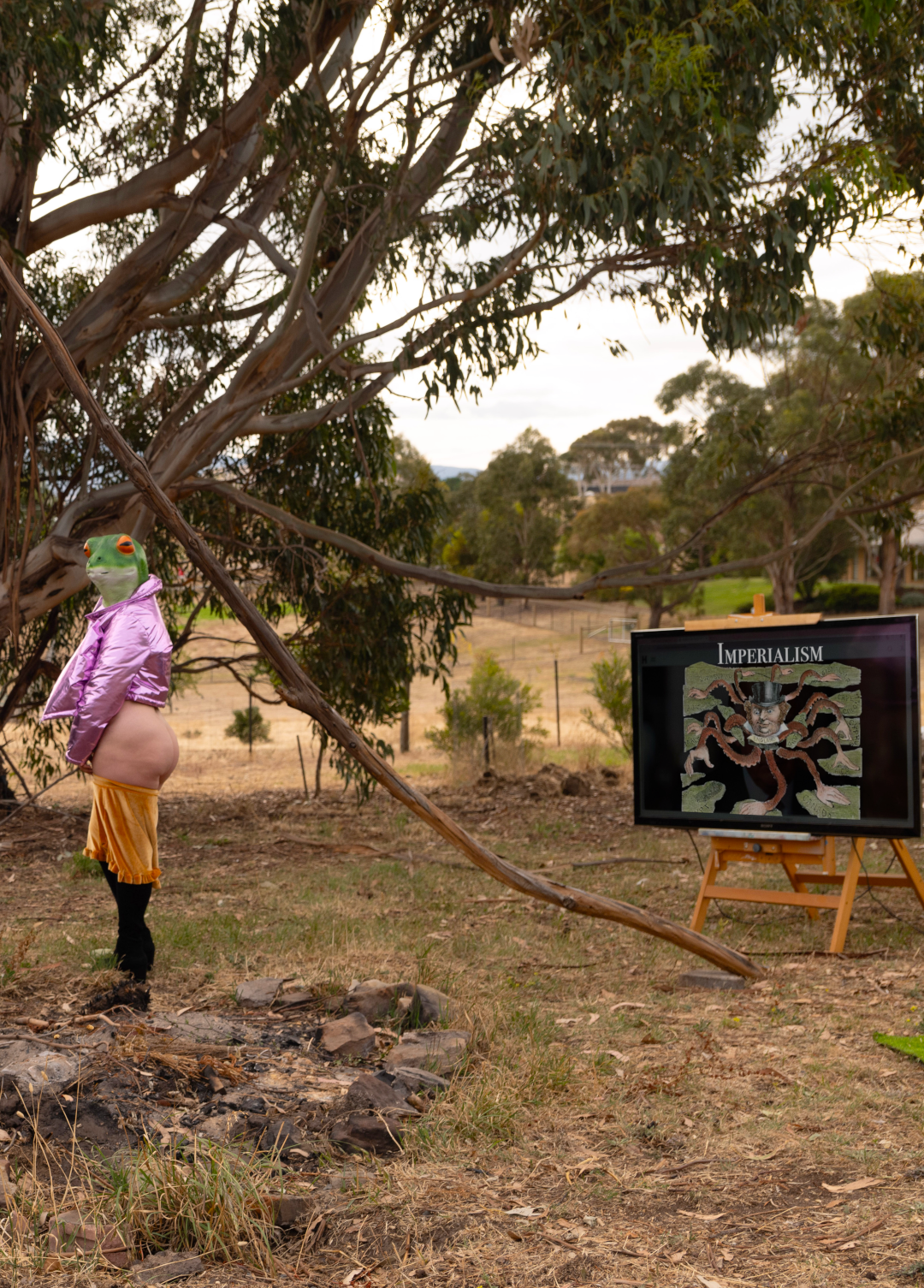
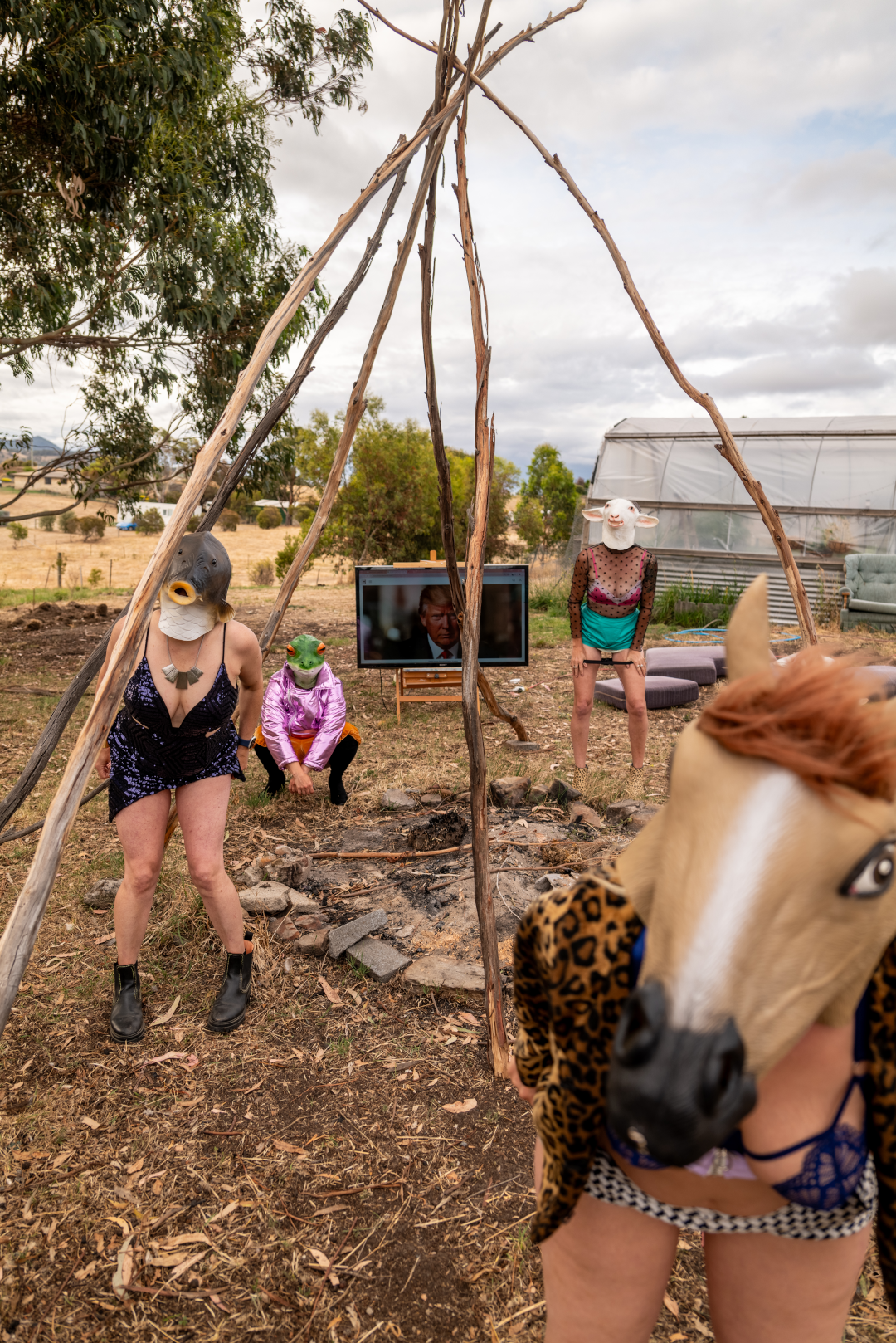
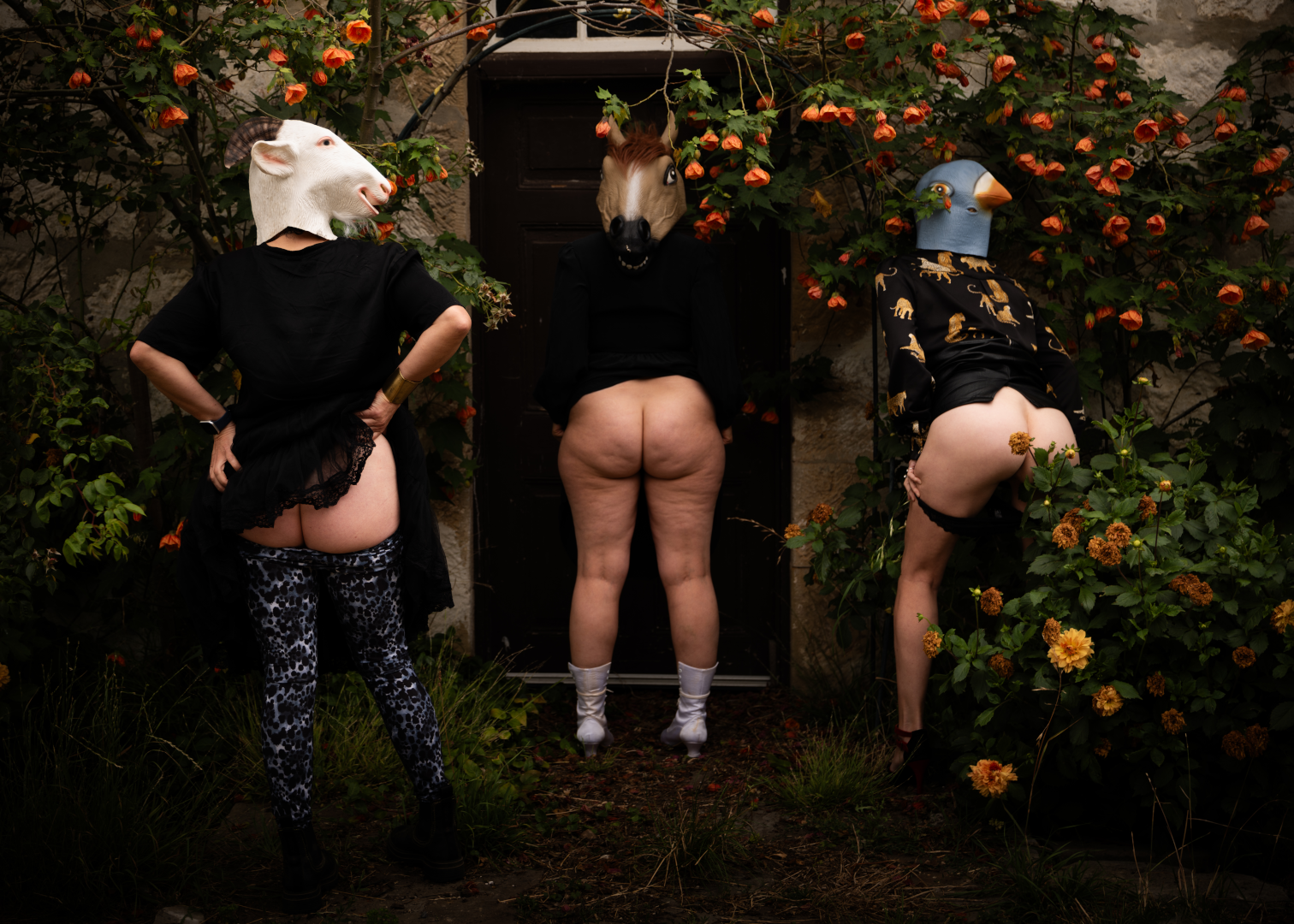
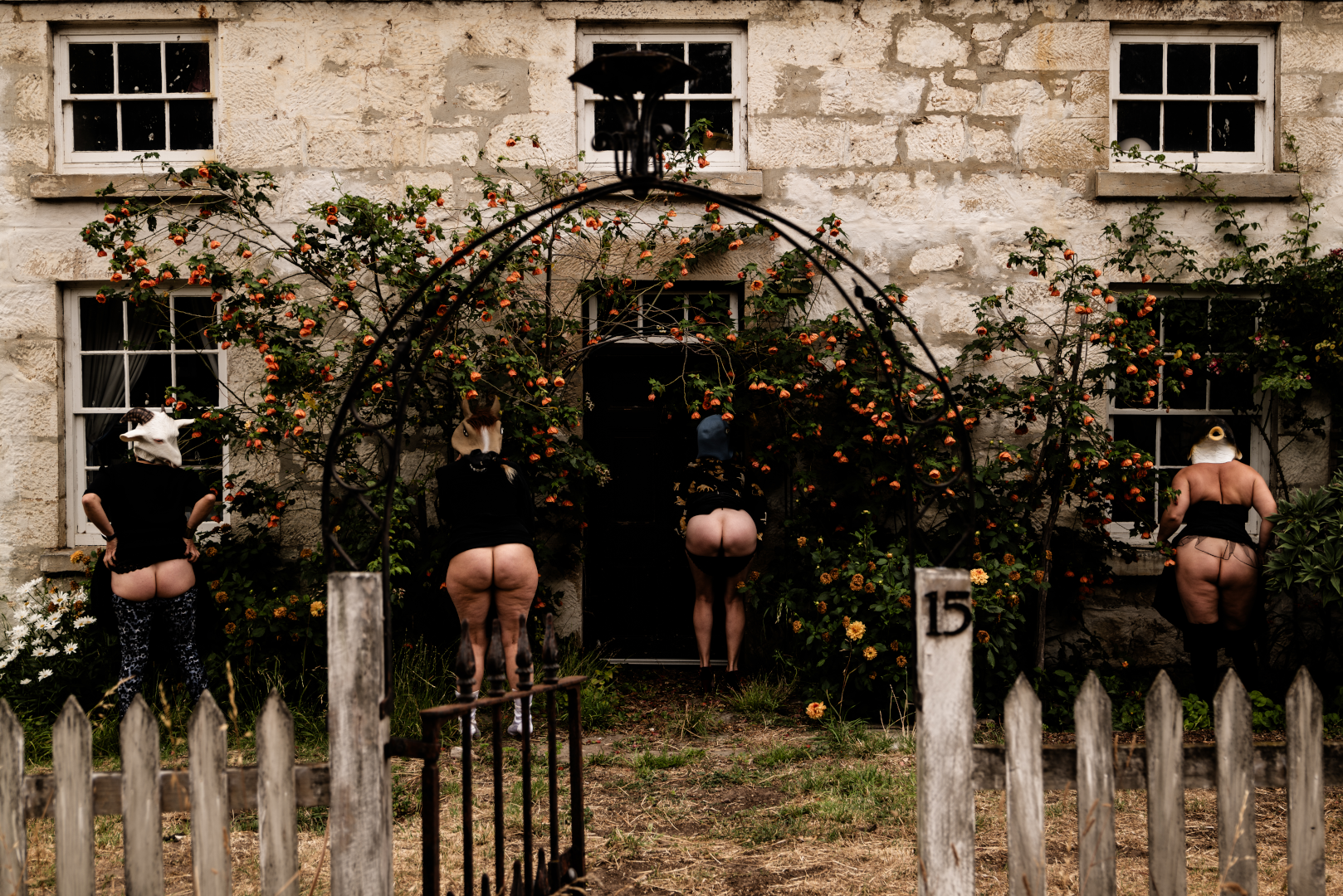
Mooning series: Gothic Mooning, 2026, digital photography, size variable
This year marks the eighteenth Solo Commission awarded by Devonport Regional Gallery. The Solo Commission was established in 2005 to provide a Tasmanian artist who has demonstrated a high level of skill and innovation through their practice with the opportunity to develop a new body of work for a solo exhibition.
In 2026, the Solo Commission was awarded to Édith Perrenot, a French/Australian interdisciplinary artist based in Hobart. As noted by Andrew Harper in the following essay, Édith clearly expresses her sentiments on being a woman in the 21st century. Fortunately, her thoughts are not internalised or reduced to enormous eye rolls; instead, they are channelled into making art which gives us plenty of food for thought. Édith’s works expresses that which still needs to be said when you have run out of words, and what you are left with is reaction and actions that reveal a discontent with the status quo.
On behalf of the Devonport Regional Gallery, I would like to congratulate Édith on Malice, Tribology or the Joy of shooting back – a thought provoking, and humorous exhibition that may raise a few eyebrows but will undoubtedly give cause to valuable conversations.
Birgitta Magnusson-Reid, Visual Arts Coordinator – Devonport Regional Gallery

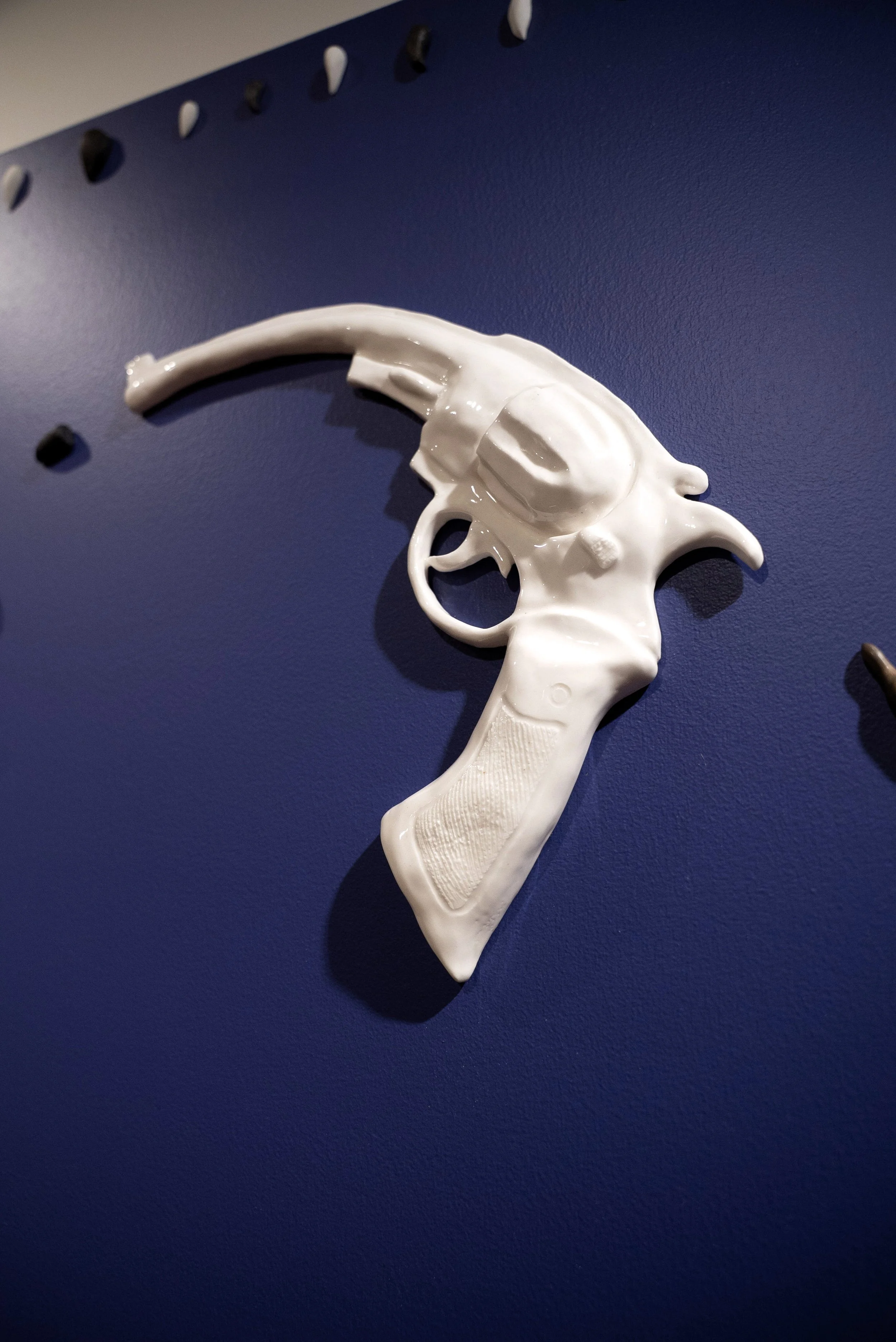
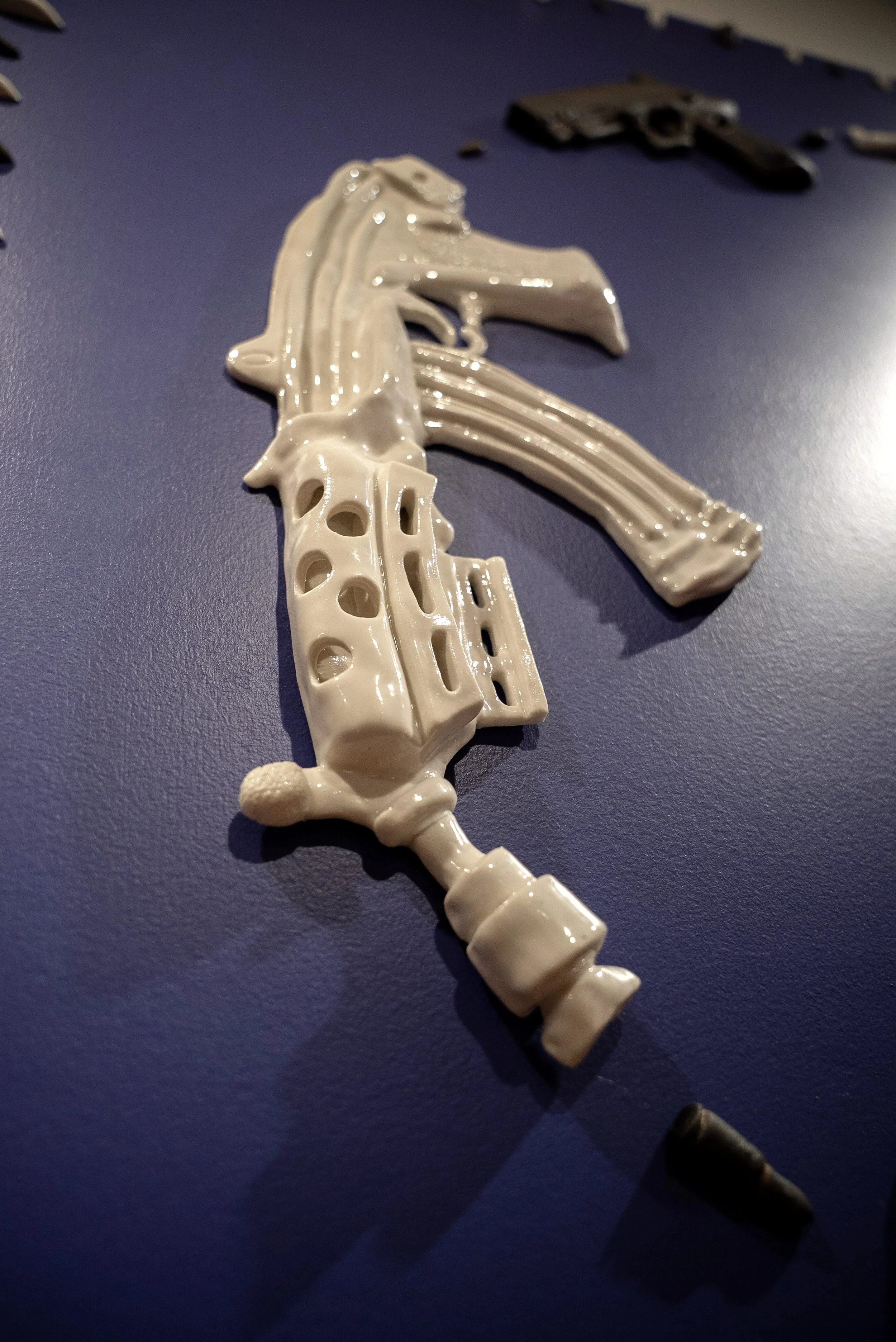
Open Fire, 2026, porcelain and brown clay on painted plywood, 1220x1220x35mm
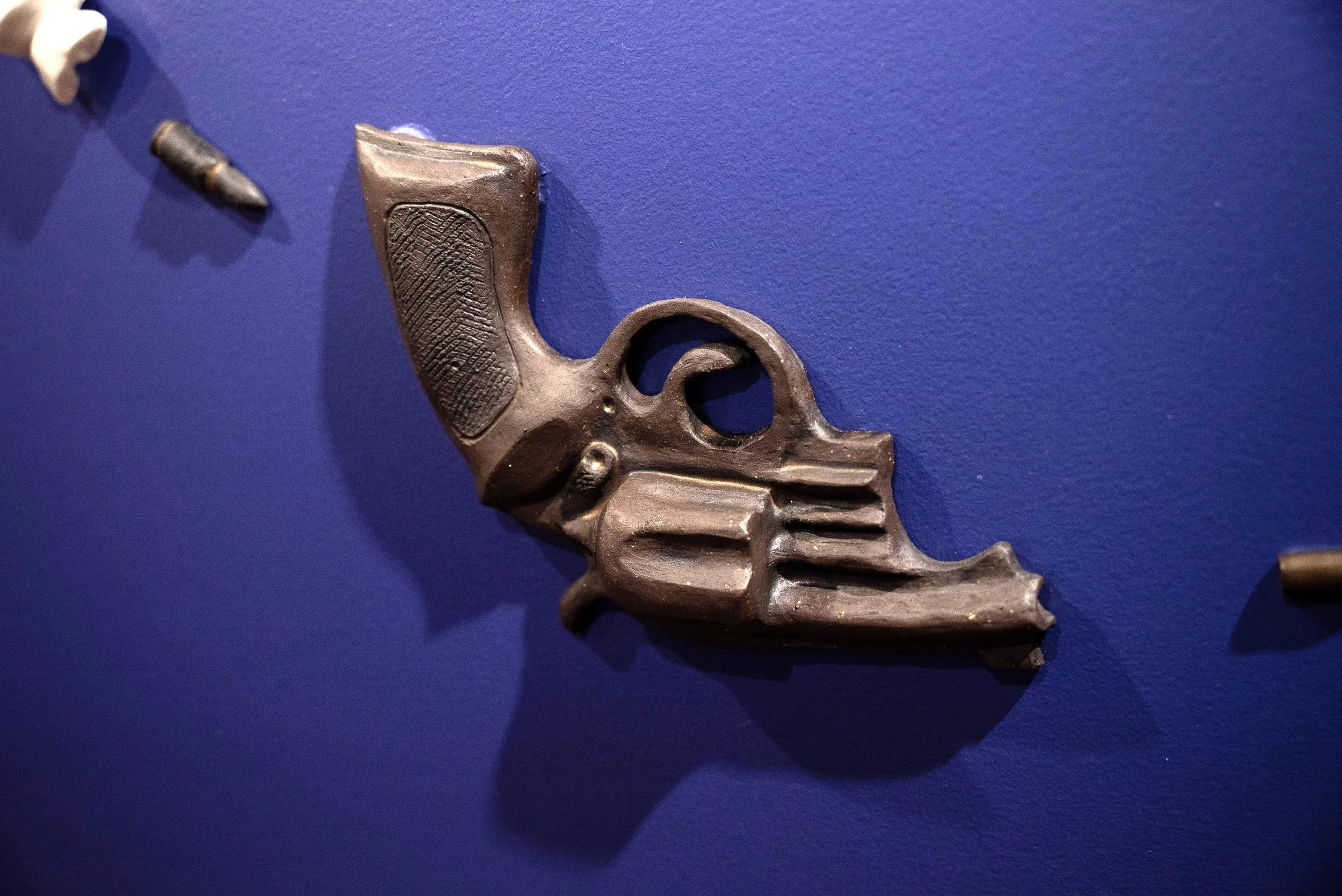

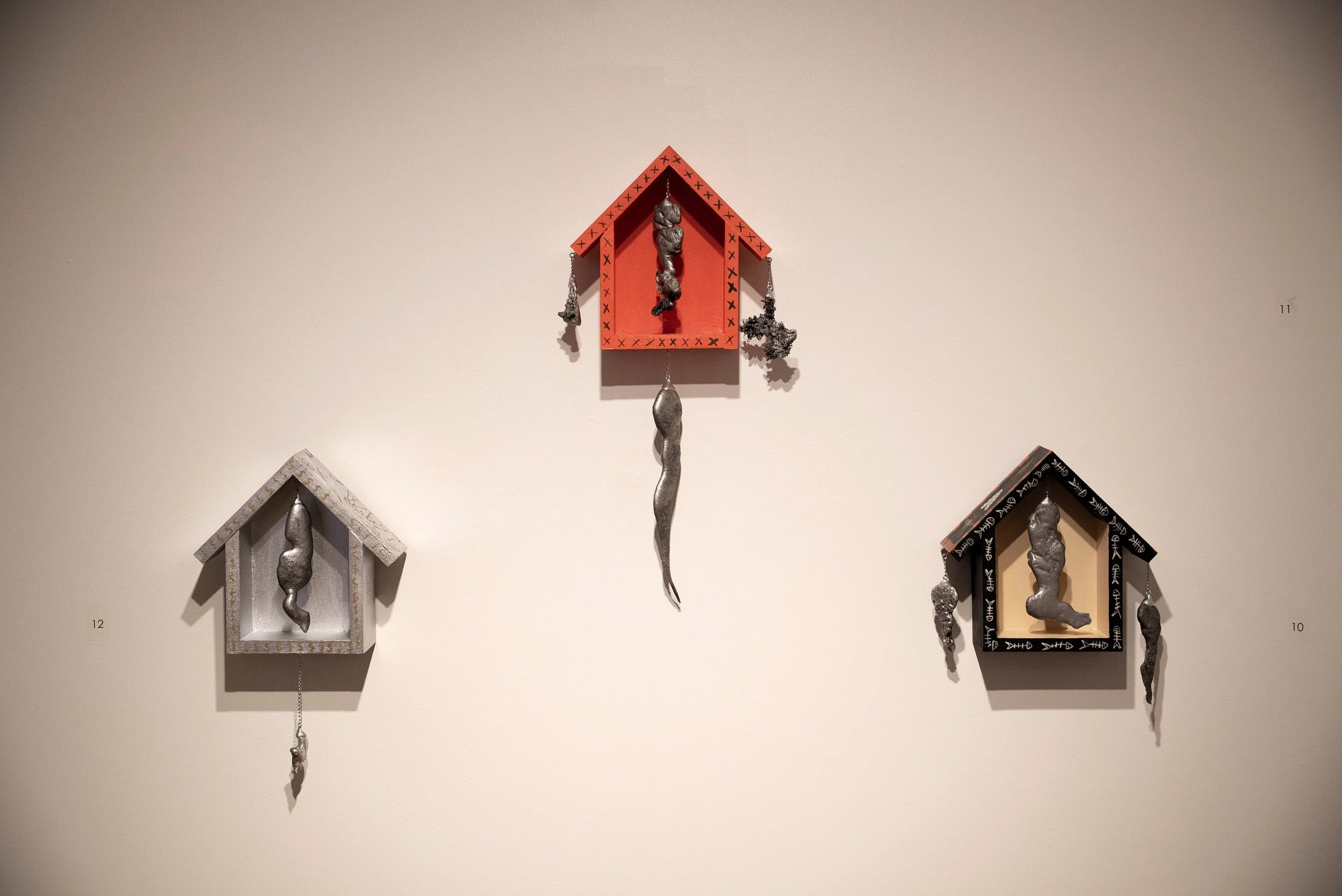
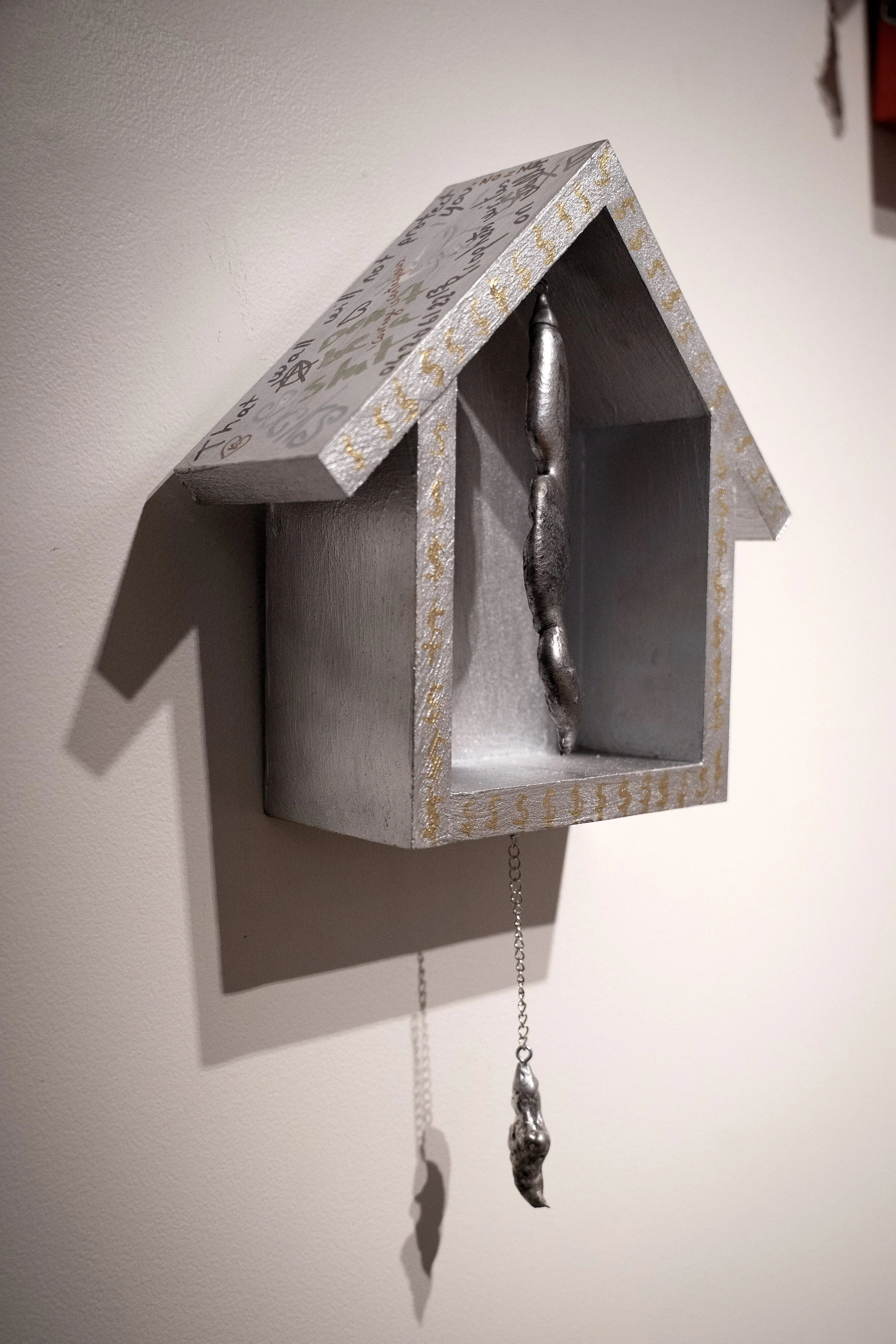
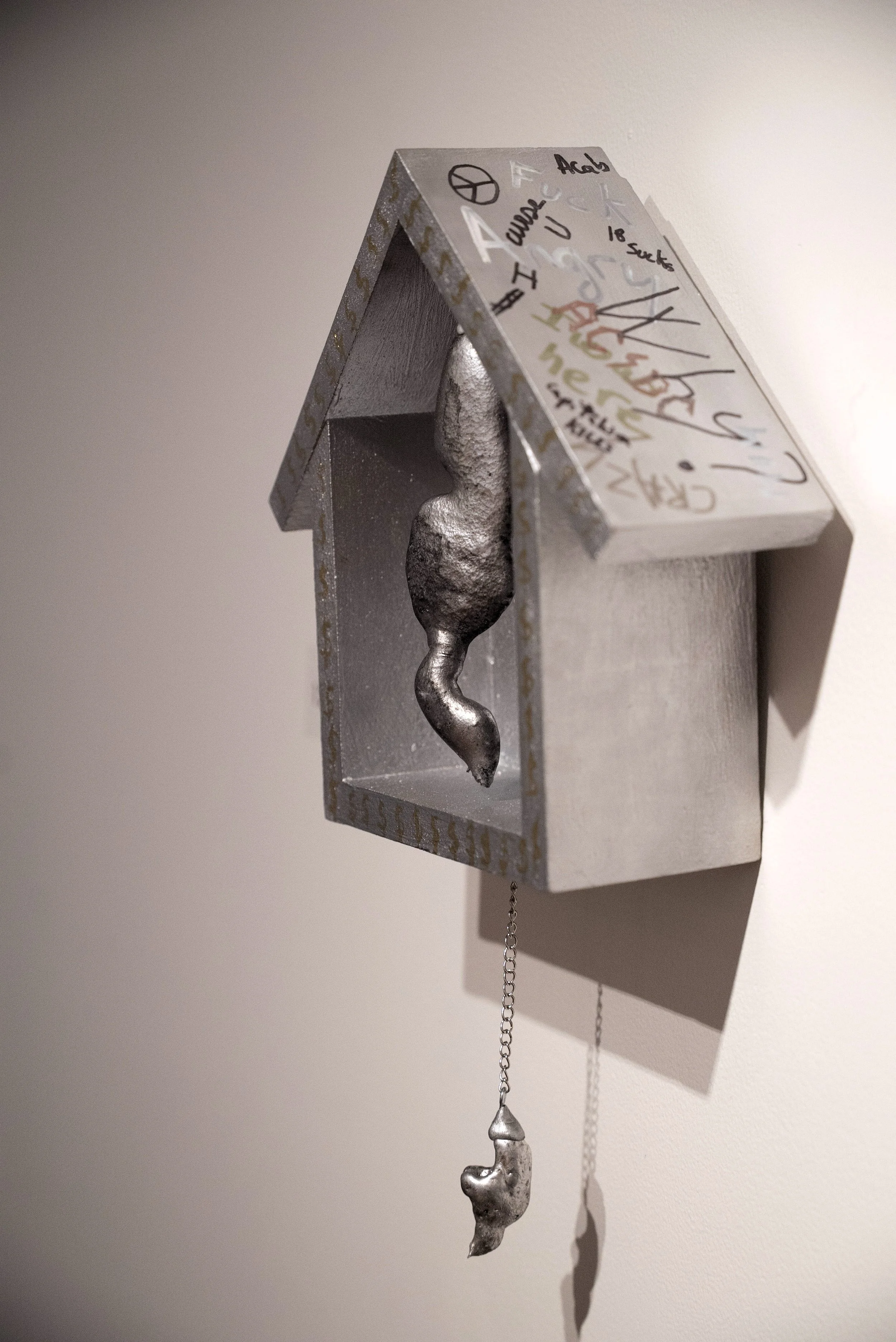
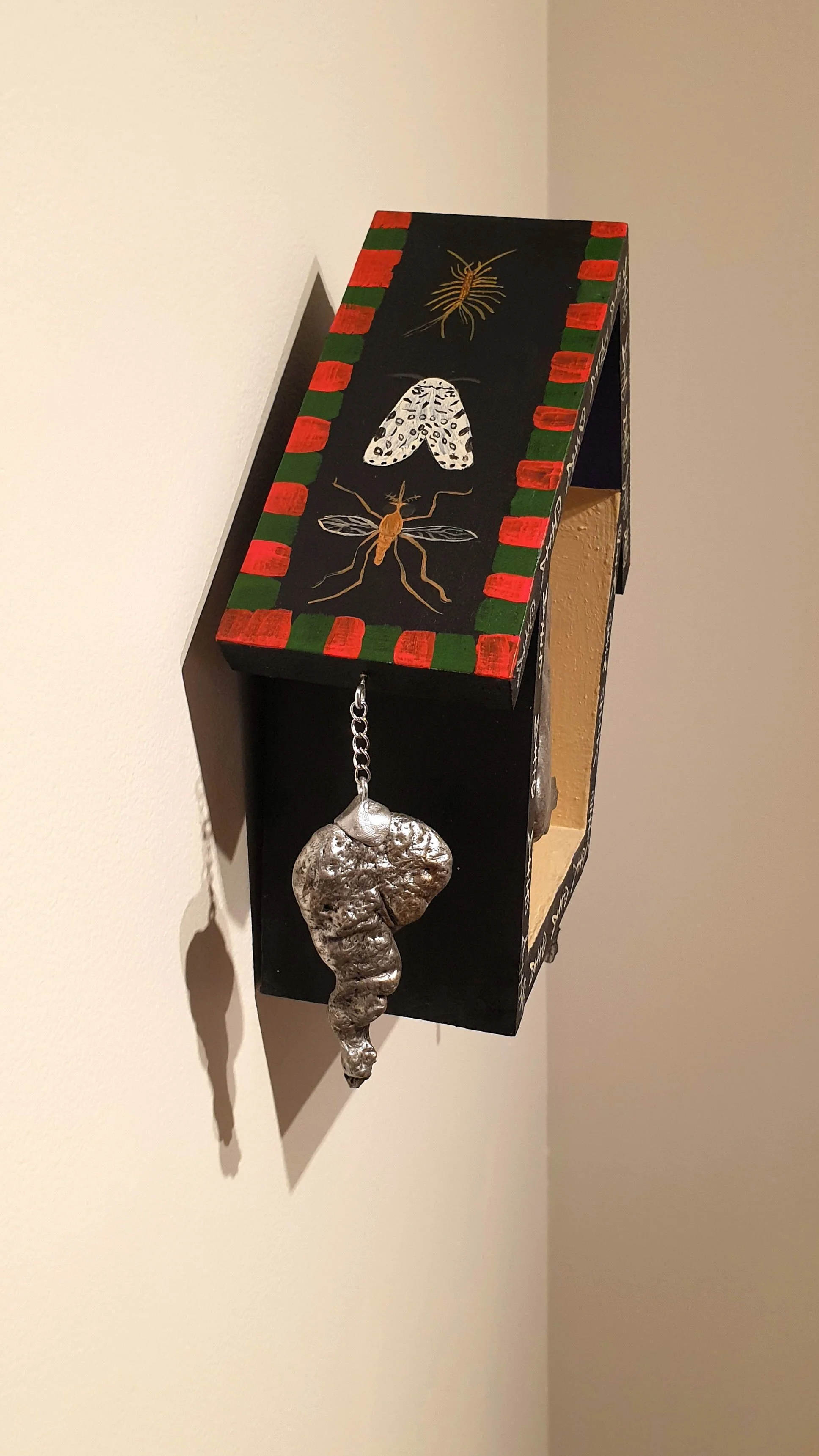
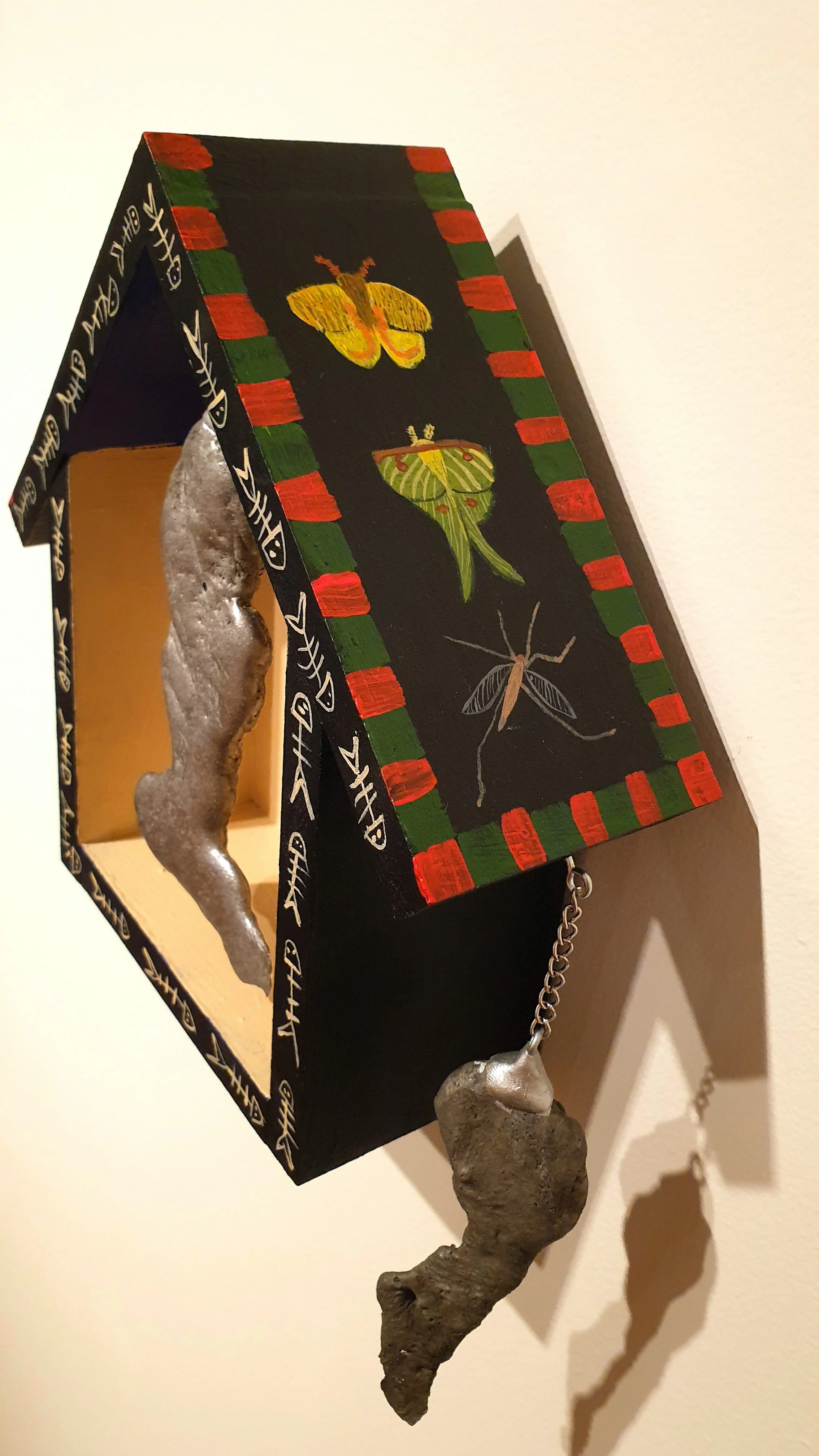
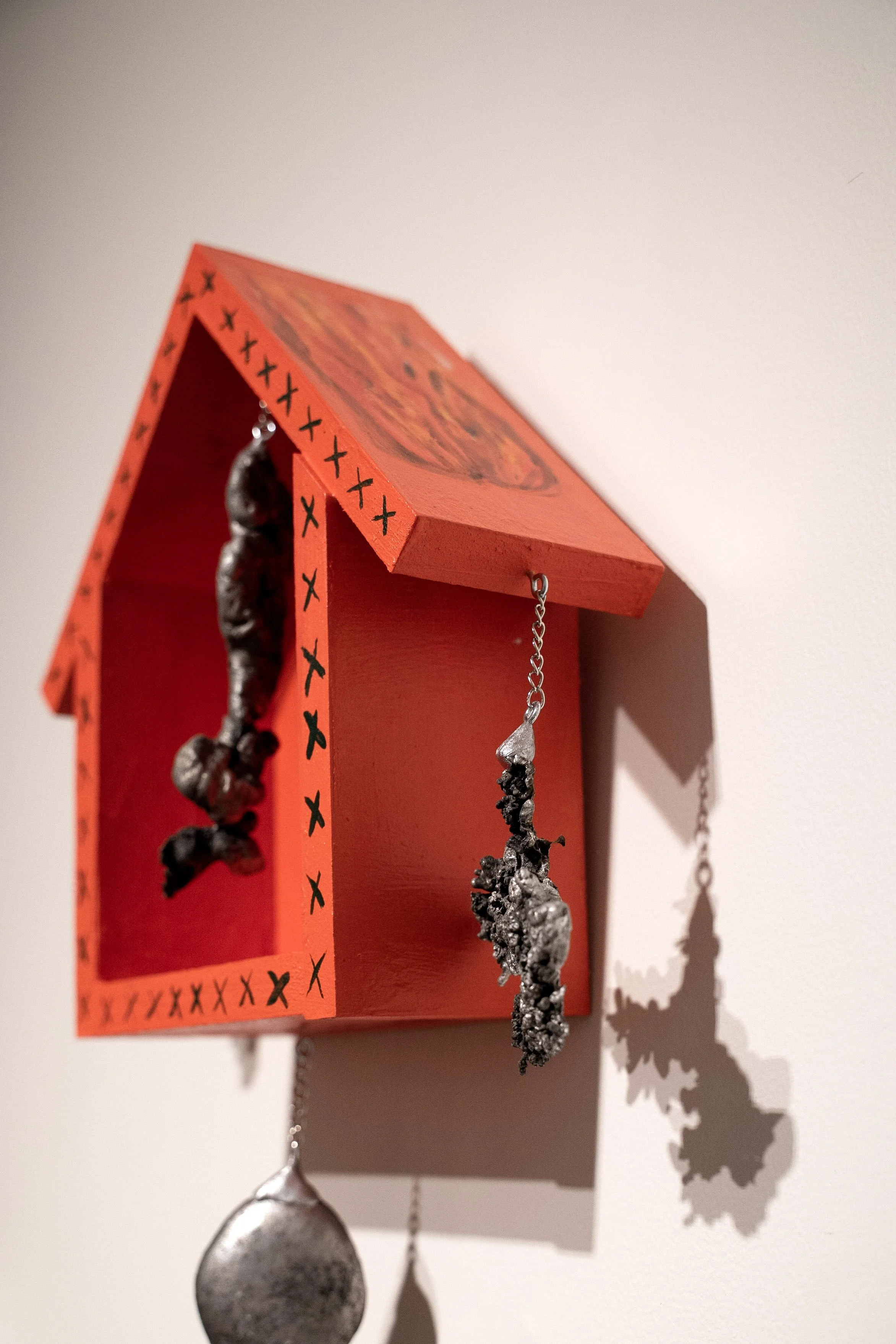
Hot wheels Altar series (from left to right): On the walls | The Burning | Night Creatures | 2026, collected melted metal pieces from burned cars , painted plywood, 270x 320x95mm (size variable)
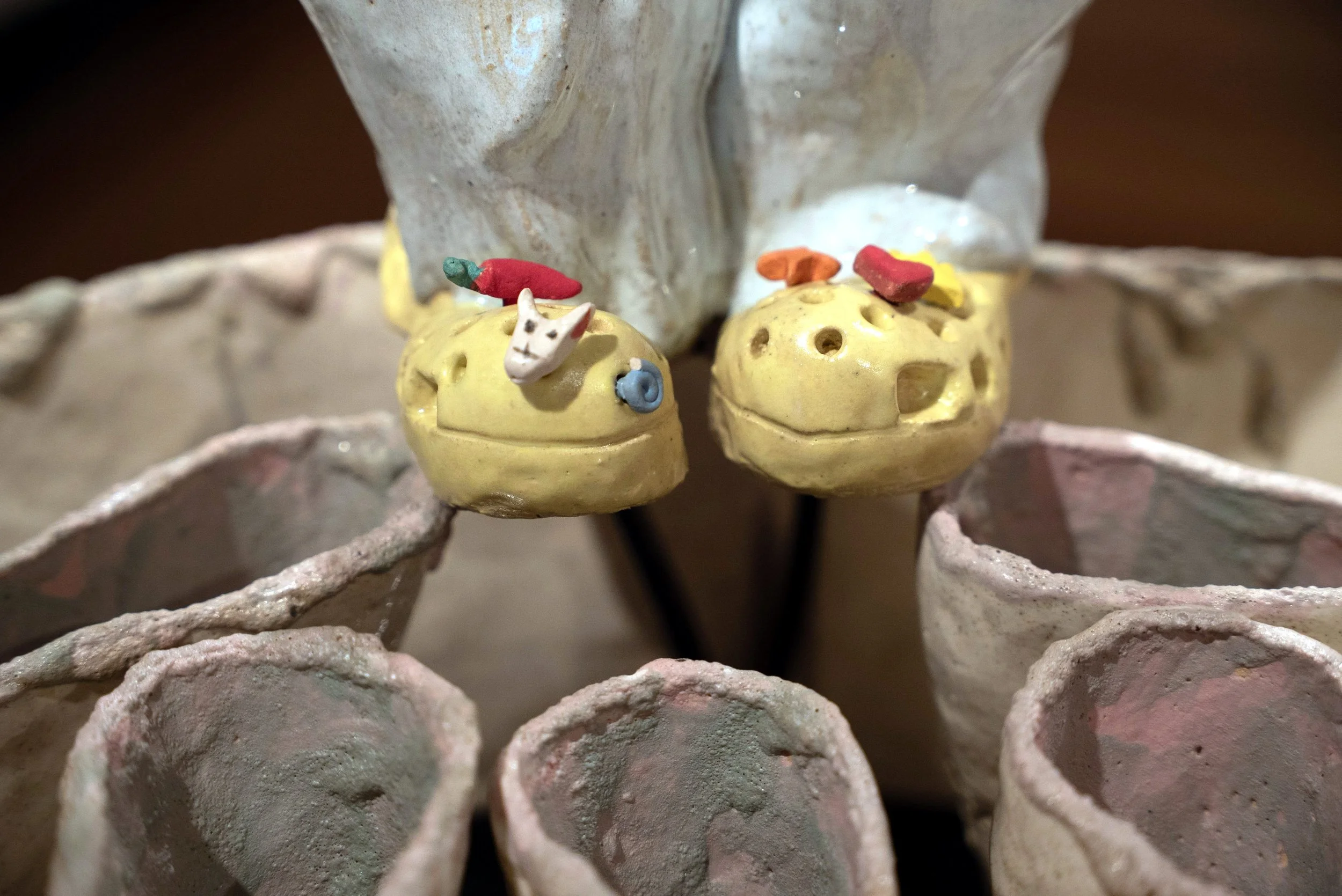
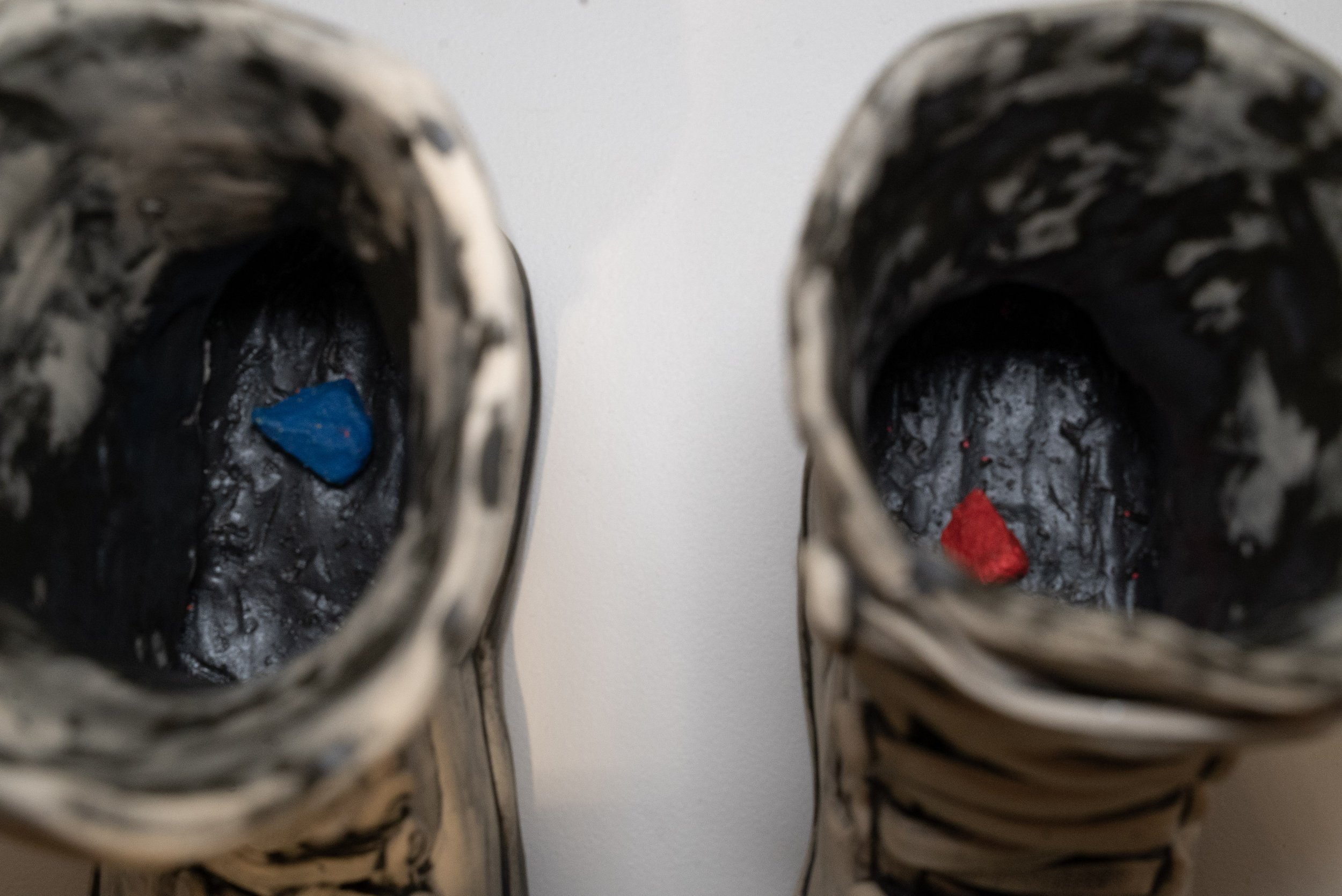
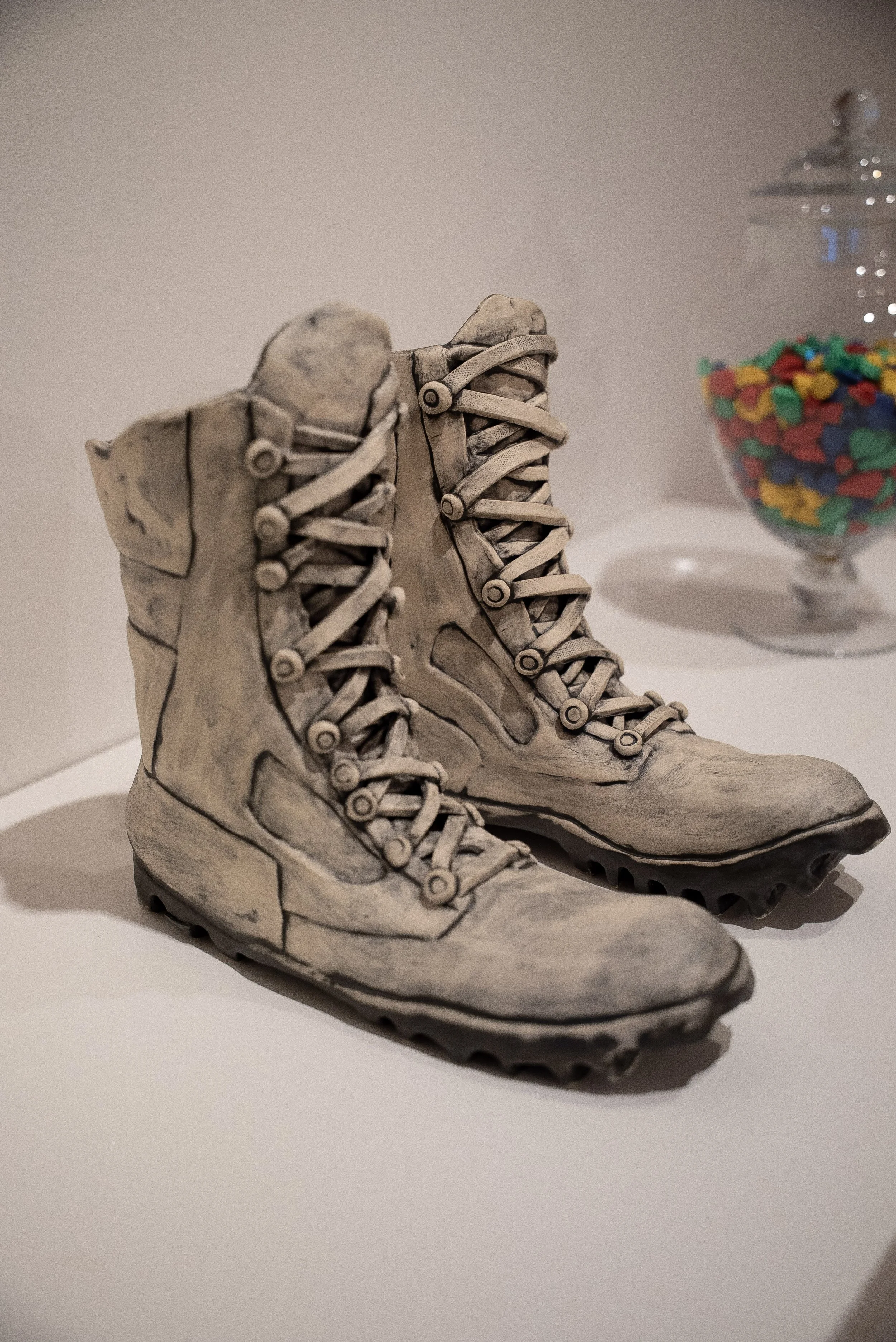
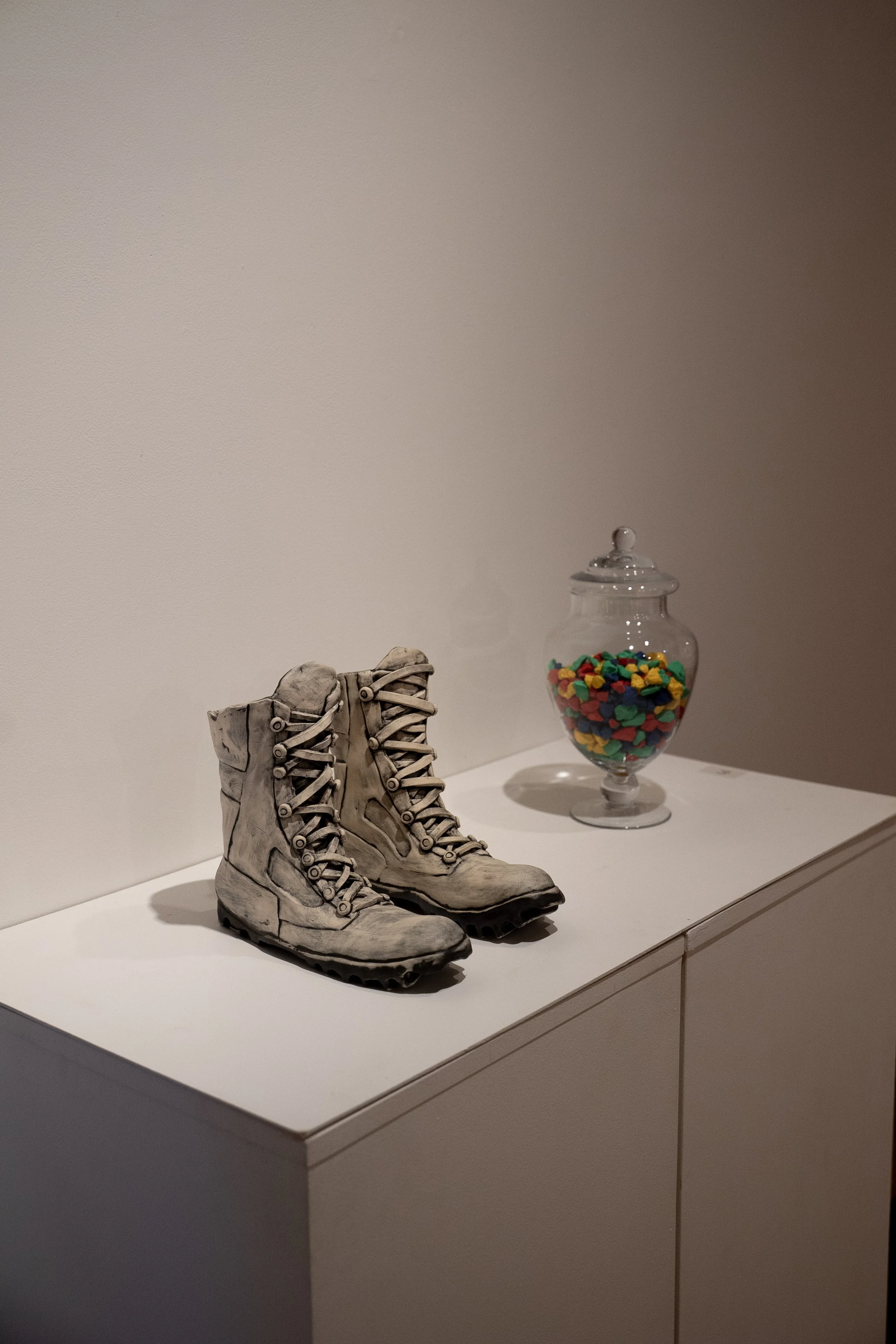
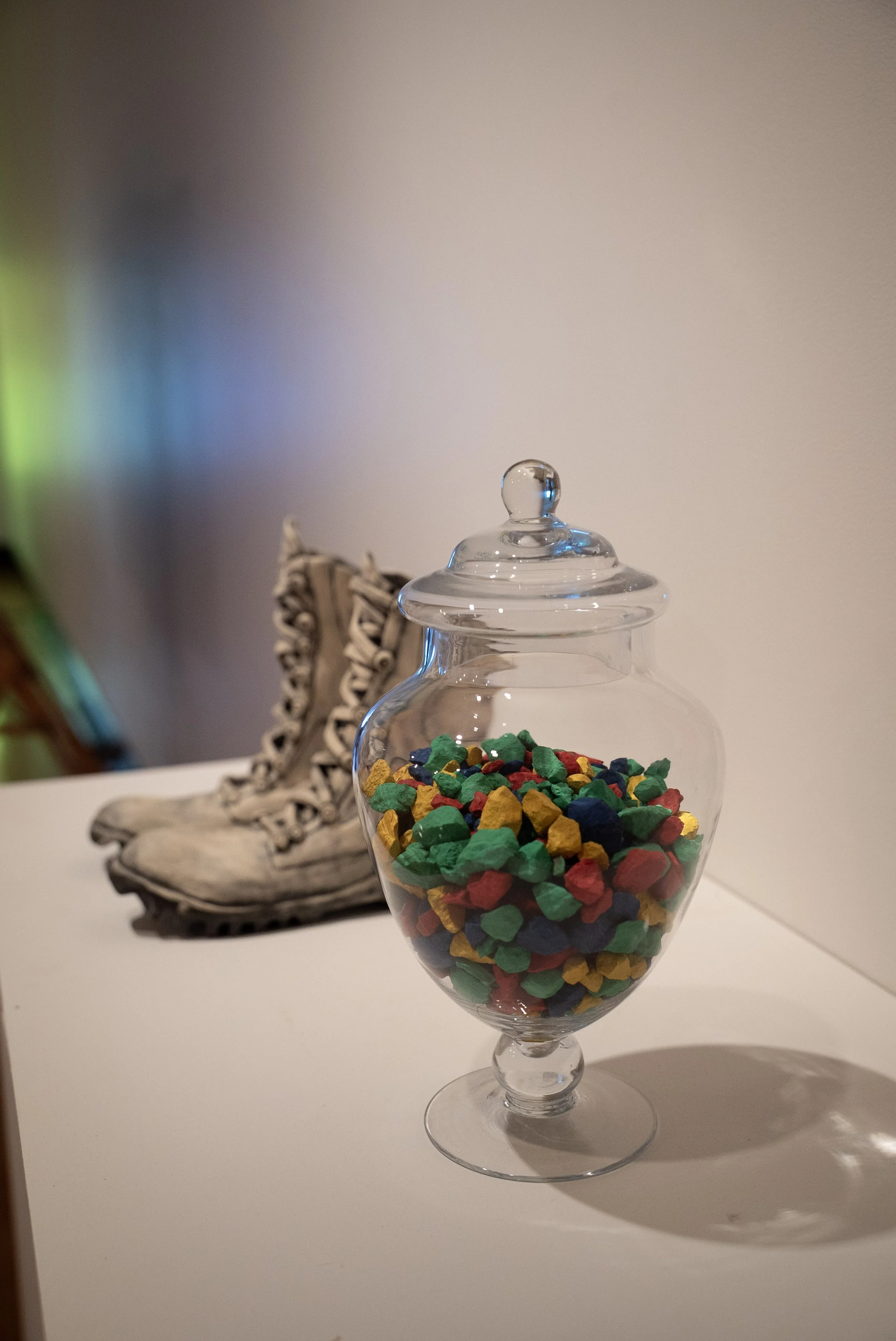
A stone in your shoe, 2026, Ceramic military boots, glass jar, painted stones
UNRULY
Rowdy, wild, unkempt, disobedient, infuriated, ungoverned, loud, wilful, boisterous, belligerent, untamed, wayward, violent, unmanageable, quarrelsome, women. The women that turn over tables and burn down churches, the women who do not contain their rage. Édith Perrenot is such a woman. There is no getting past this, so we shall state it outright: she is likely angry, certainly pissed off, righteously annoyed and justifiably enraged, and if you are asking why, we might politely suggest you have not been paying attention: the world turned to blazing landfill some years back, and is now molten rivers of hot refuse belching toxic smoke. Perrenot is not paralysed by this, but she also knows she can only do so much. The choice to make art was a choice to make unruly art, then: not so much political as politicised by the near literal sewer pump churning from every screen.
It does not stop.
It is exhausting.
Making art is a fair reaction and it is something that can actually be done: Édith has unleashed her malice, and sought to share it, embody it, and taken some time to make it mean as much as she can.
There are layers. There are guns. Guns are confronting. Perhaps they are the most confronting objects you could invoke in art. Guns have allegiances and associations: drug dealers, freedom fighters, criminals, Police, Luigi Magioni (yes, the ghost gun he partially printed, and then committed murder with is represented).
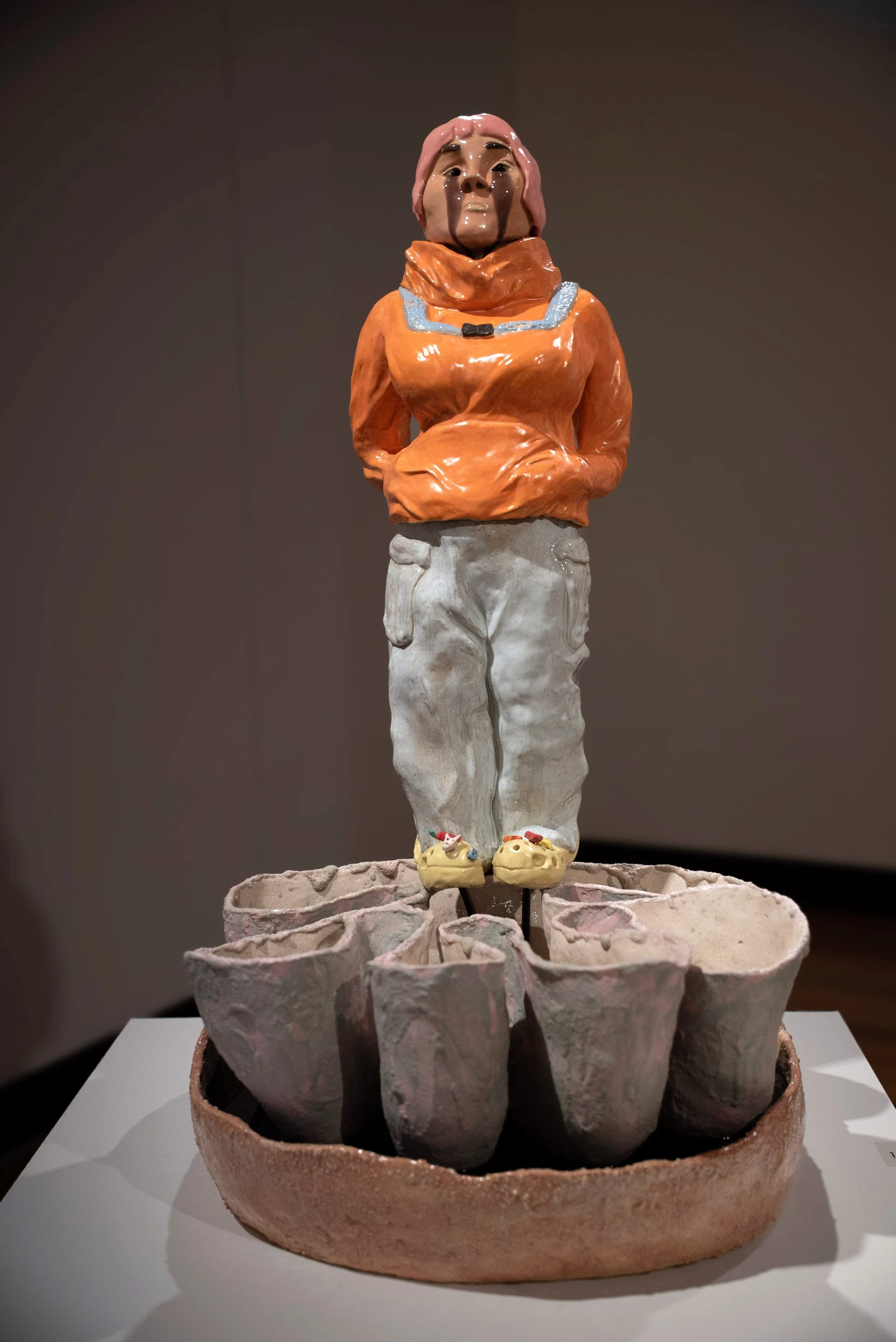
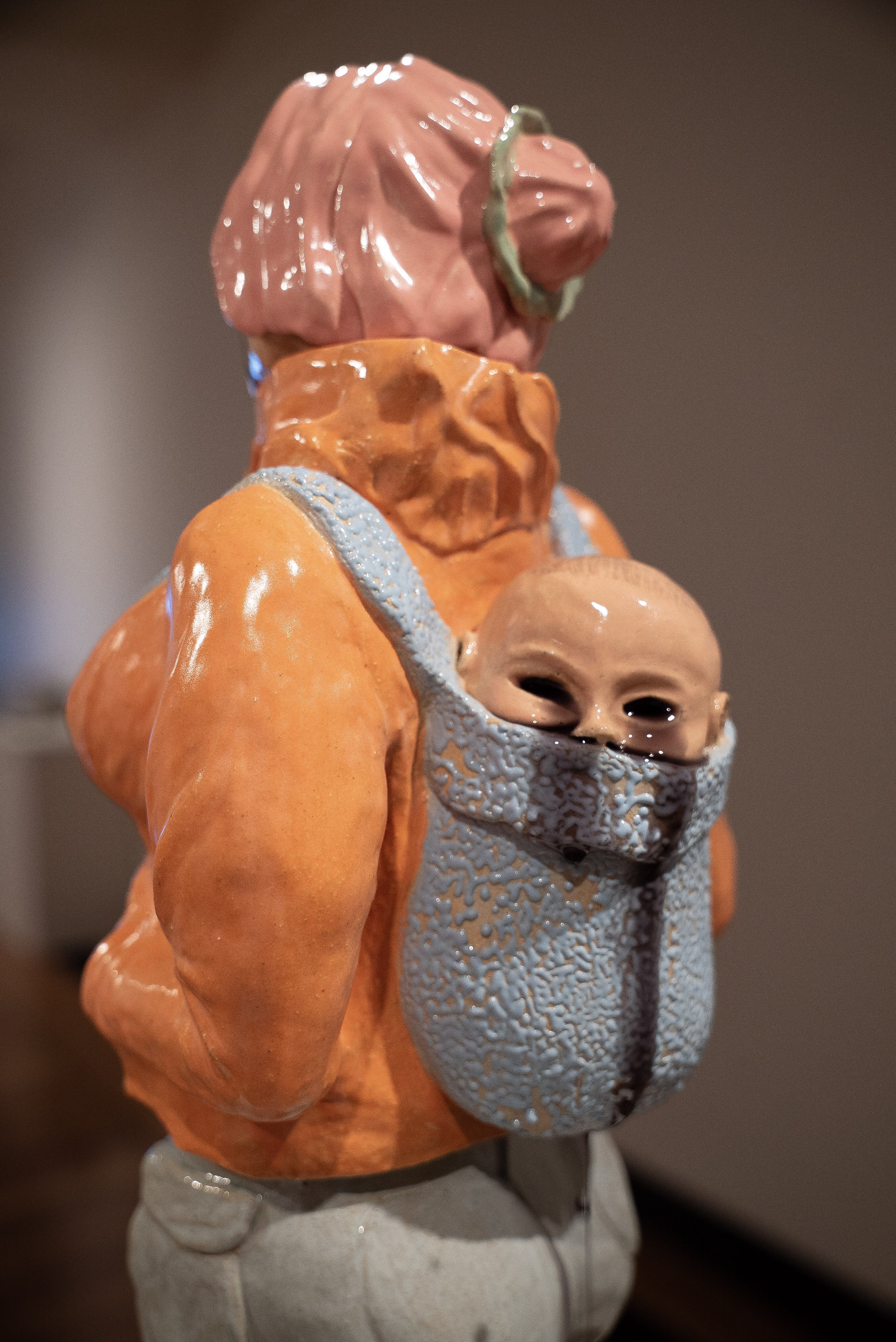
There are relics harvested from burnt-out cars; the pointless act of destruction leaves metal tears, now harvested into totems: like the ceramic guns, these are icons of destruction (1) , little monuments to chaos, that are destructive but do not harm humans. Tiny beauty, found in the ashes of futile rage. There’s a connection here to fossil fuel consumption; oil is the centre of another work, the Pietà à l’huile – a ceramic fountain structure of a mother figure carrying her baby on her back. The traditional Pietà is Mary carrying the deceased body of Christ; here the child lives, but both of them weep. A weeping statue is a miracle of sorts; unnerving but potent. Mary is a complex figure whose connection to pagan religions is hotly debated; here she is updated to a more regular mother figure wearing crocs, her baby clearly a baby and alive – yet both weep tears of oil, continually, into a vessel. This Pietà is a fountain and a miracle and the violent connections of blood and oil in a dominant atmosphere of late Capital are made here.
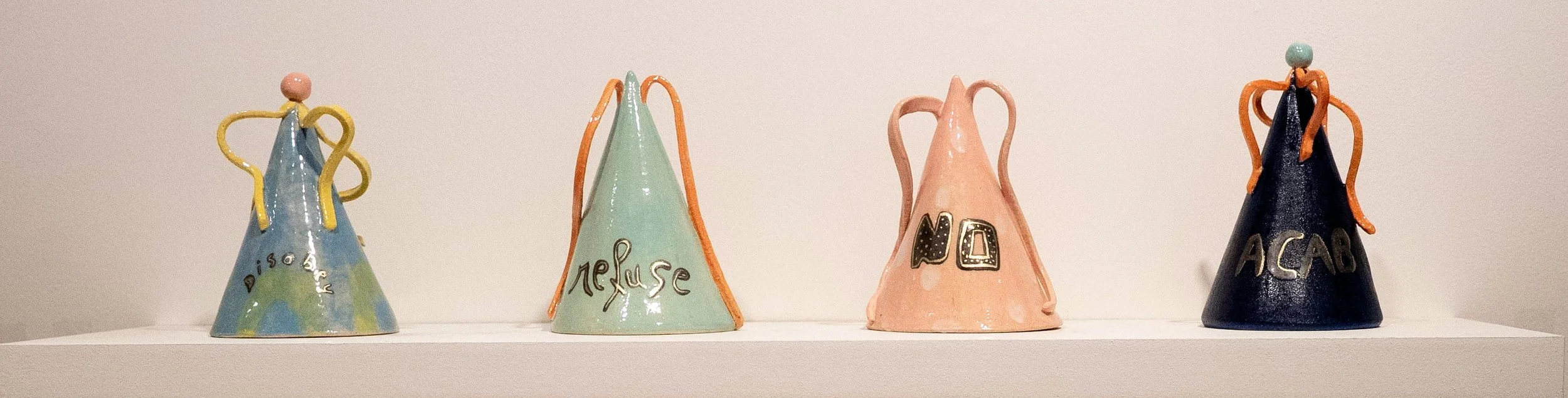
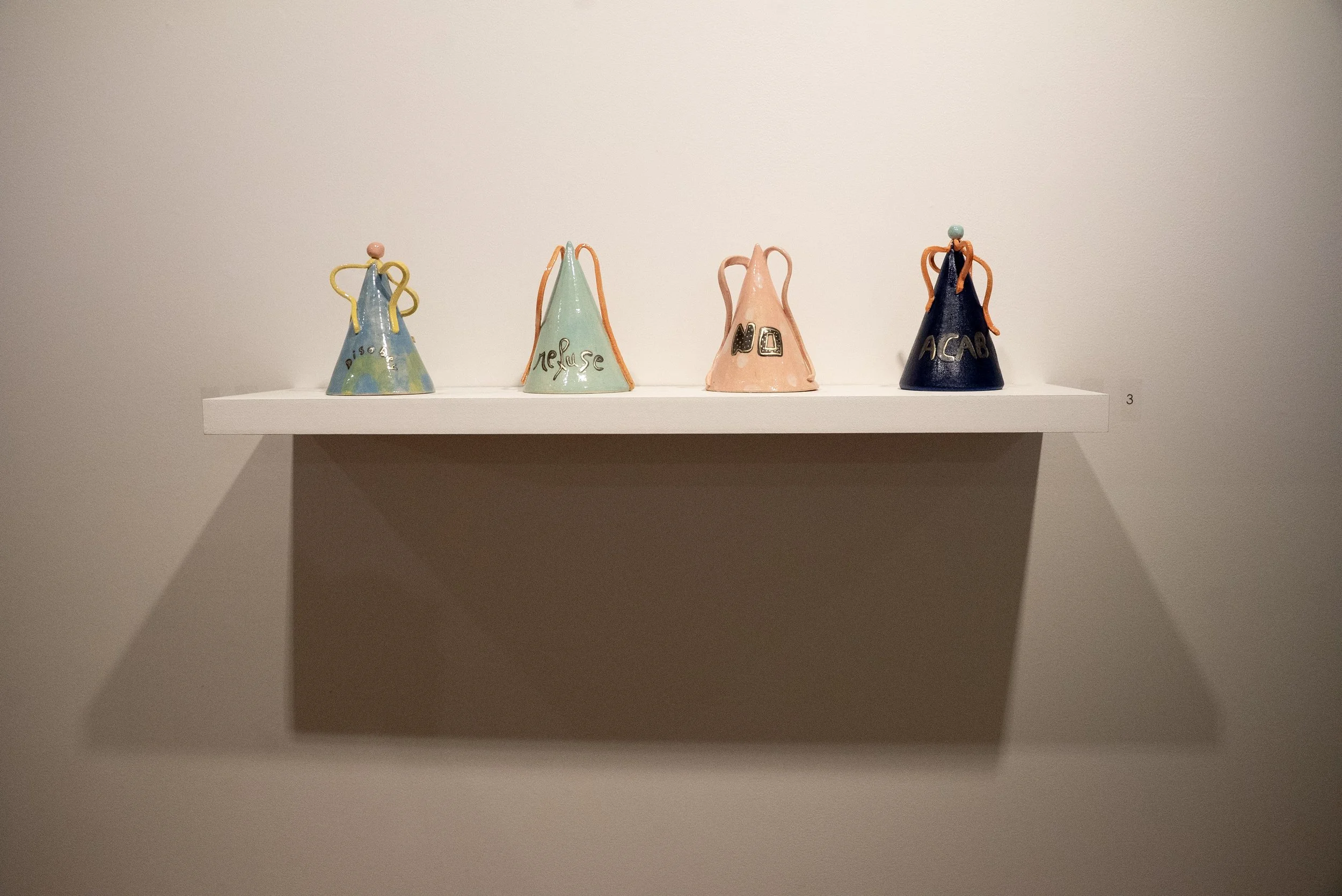
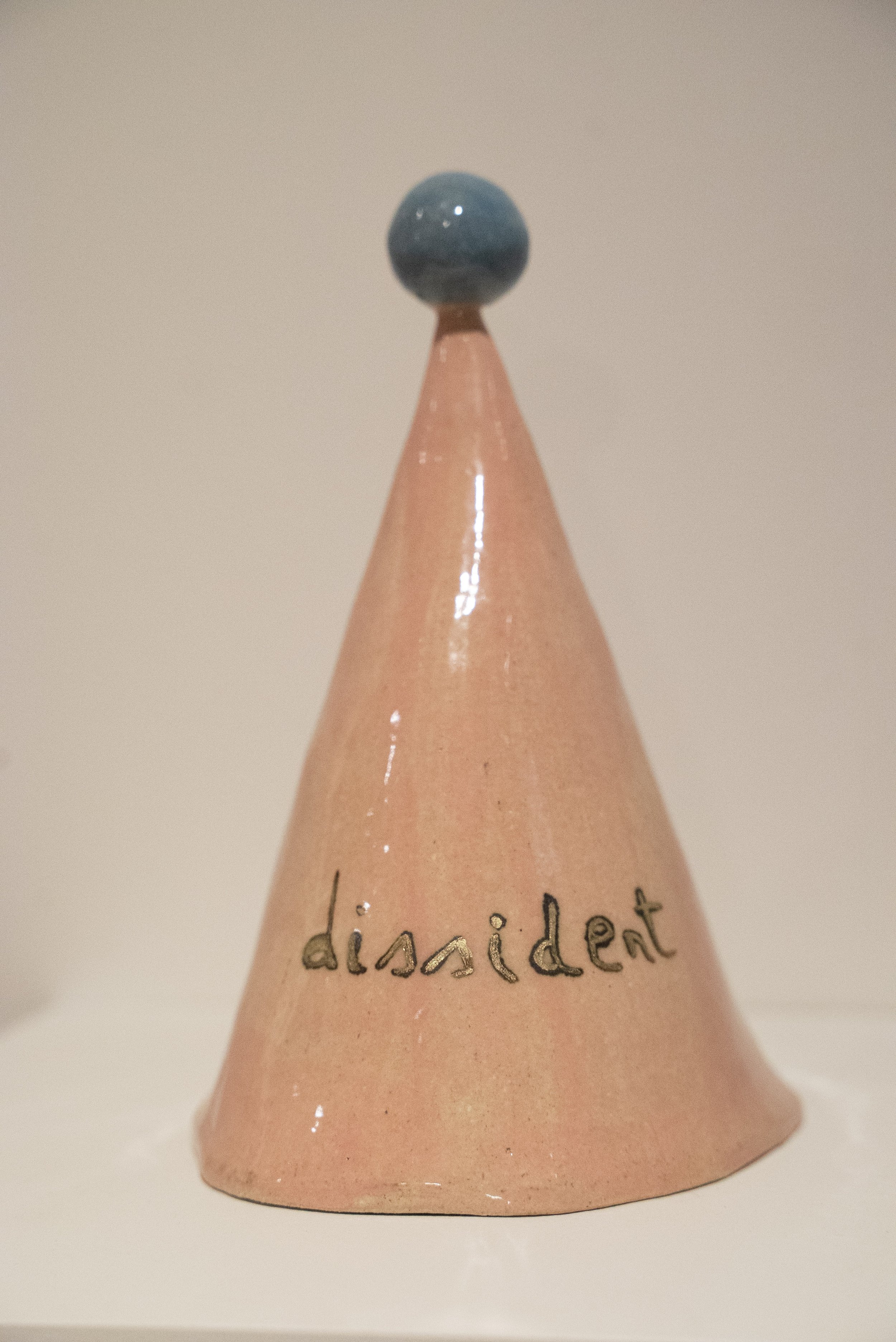
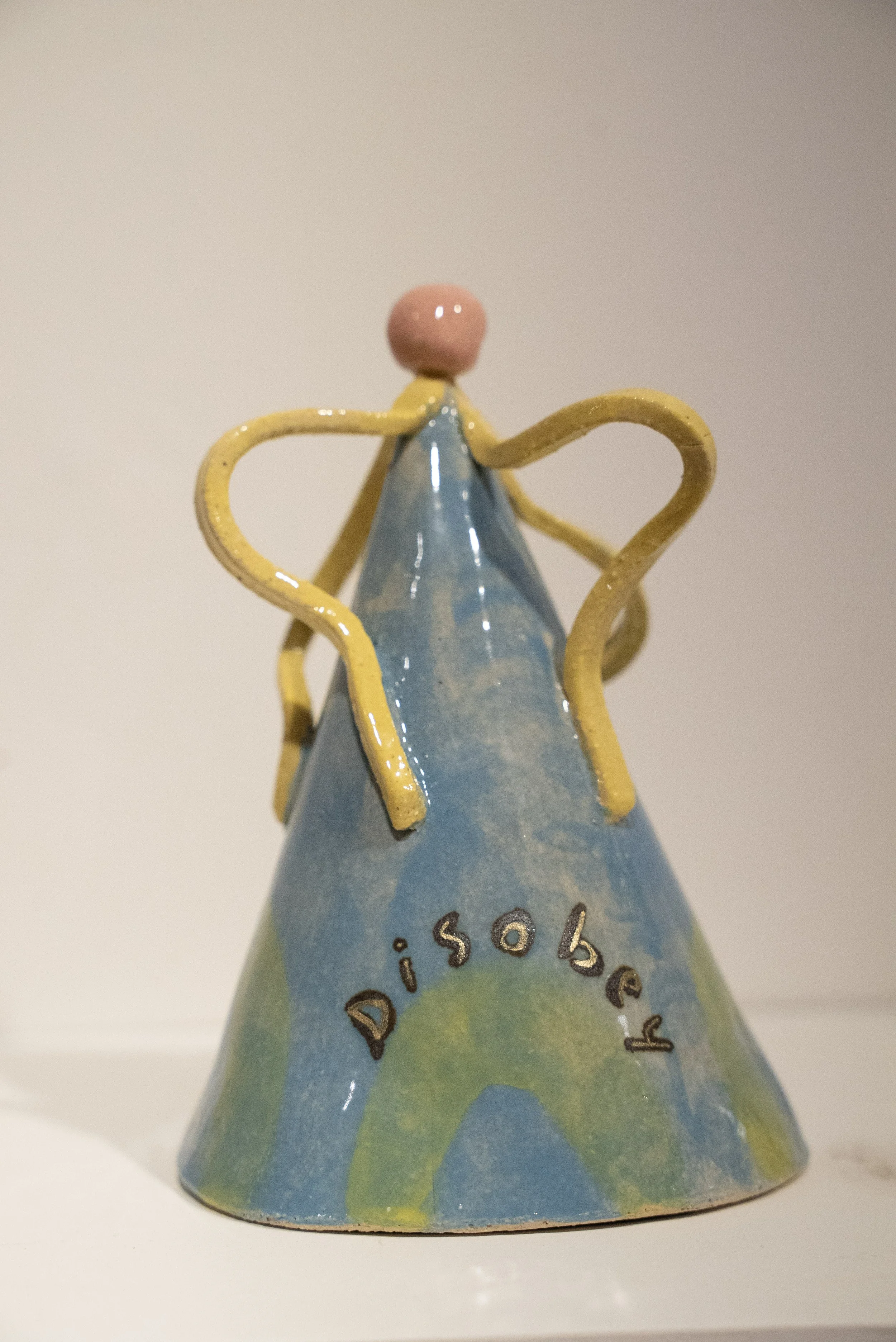
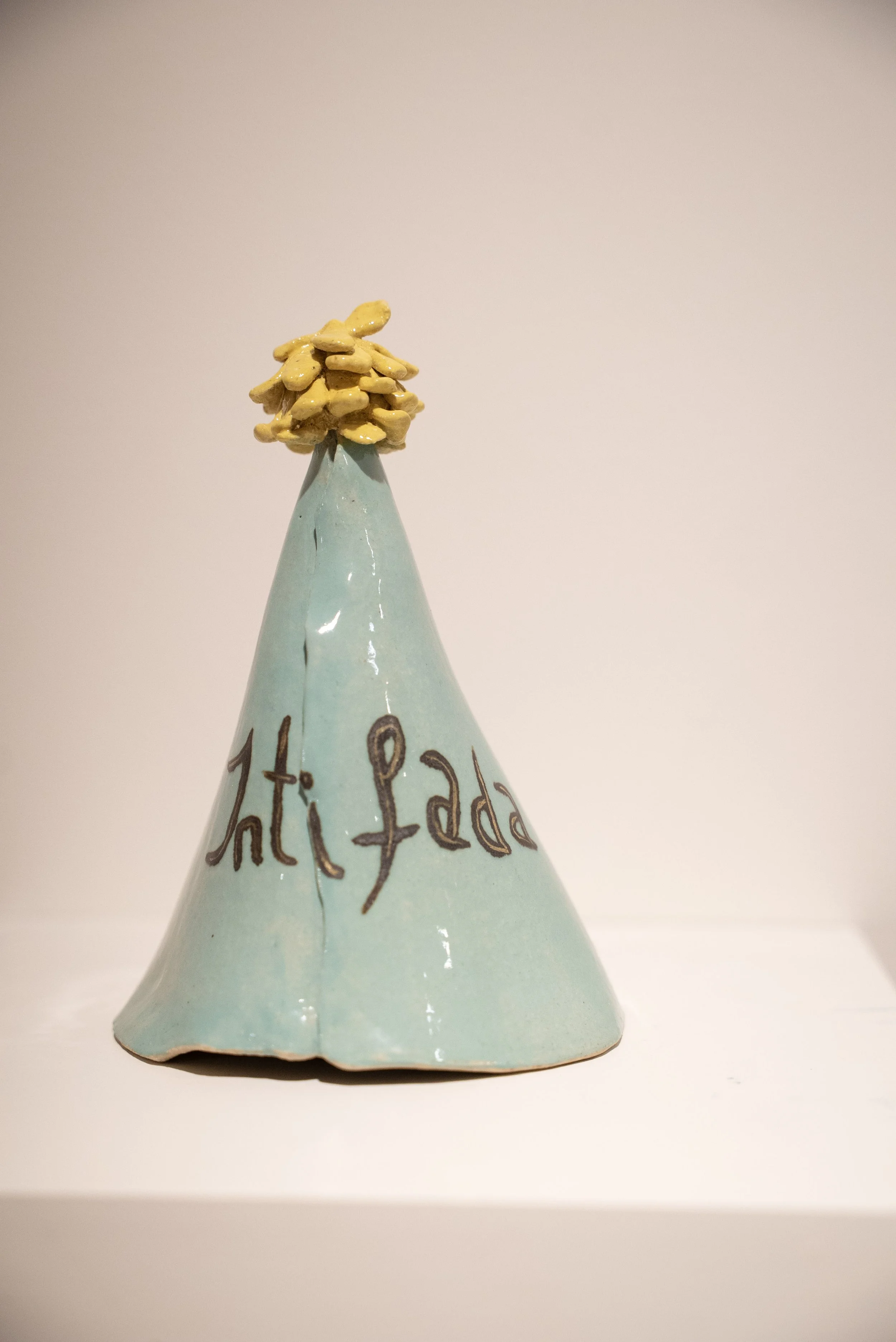
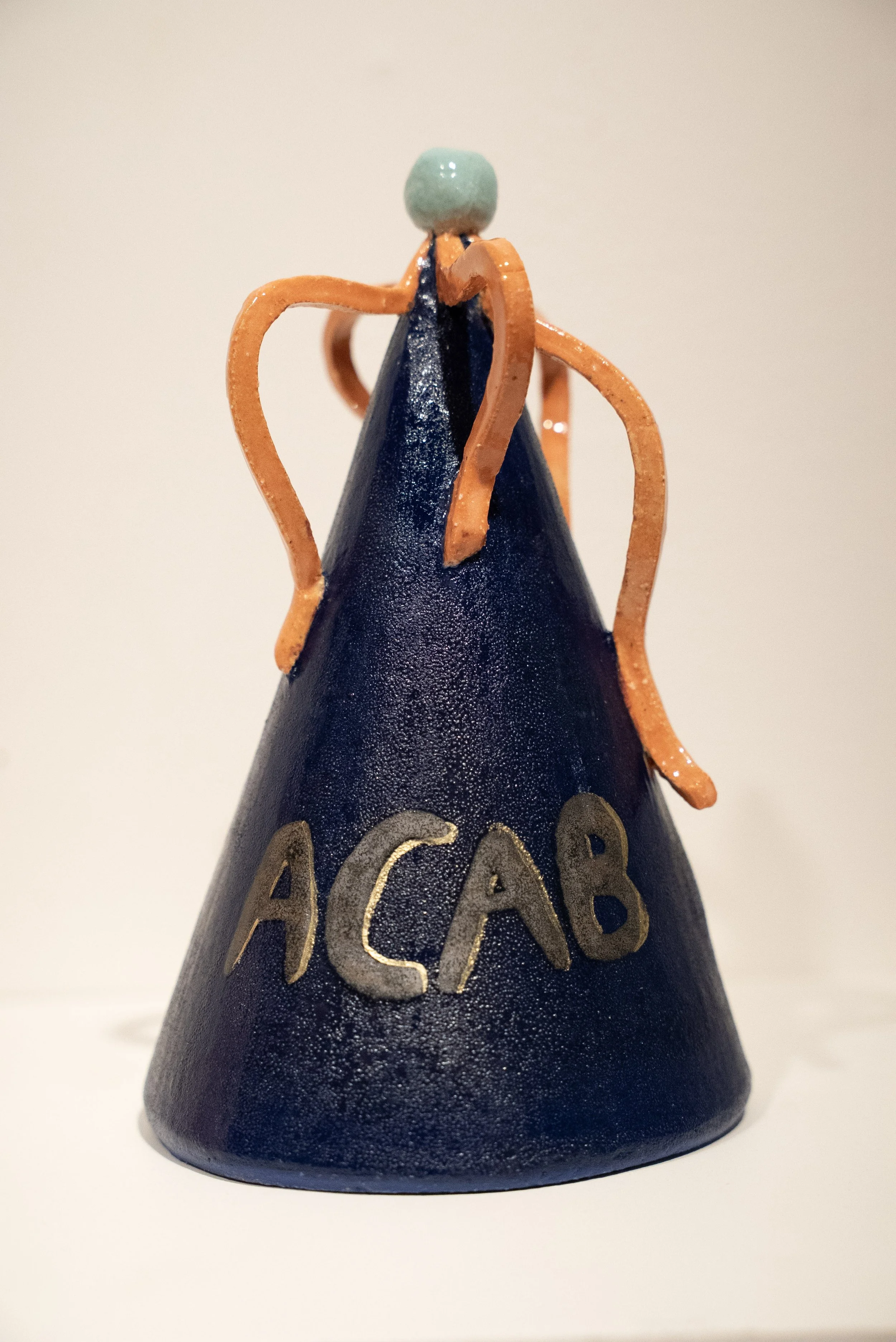
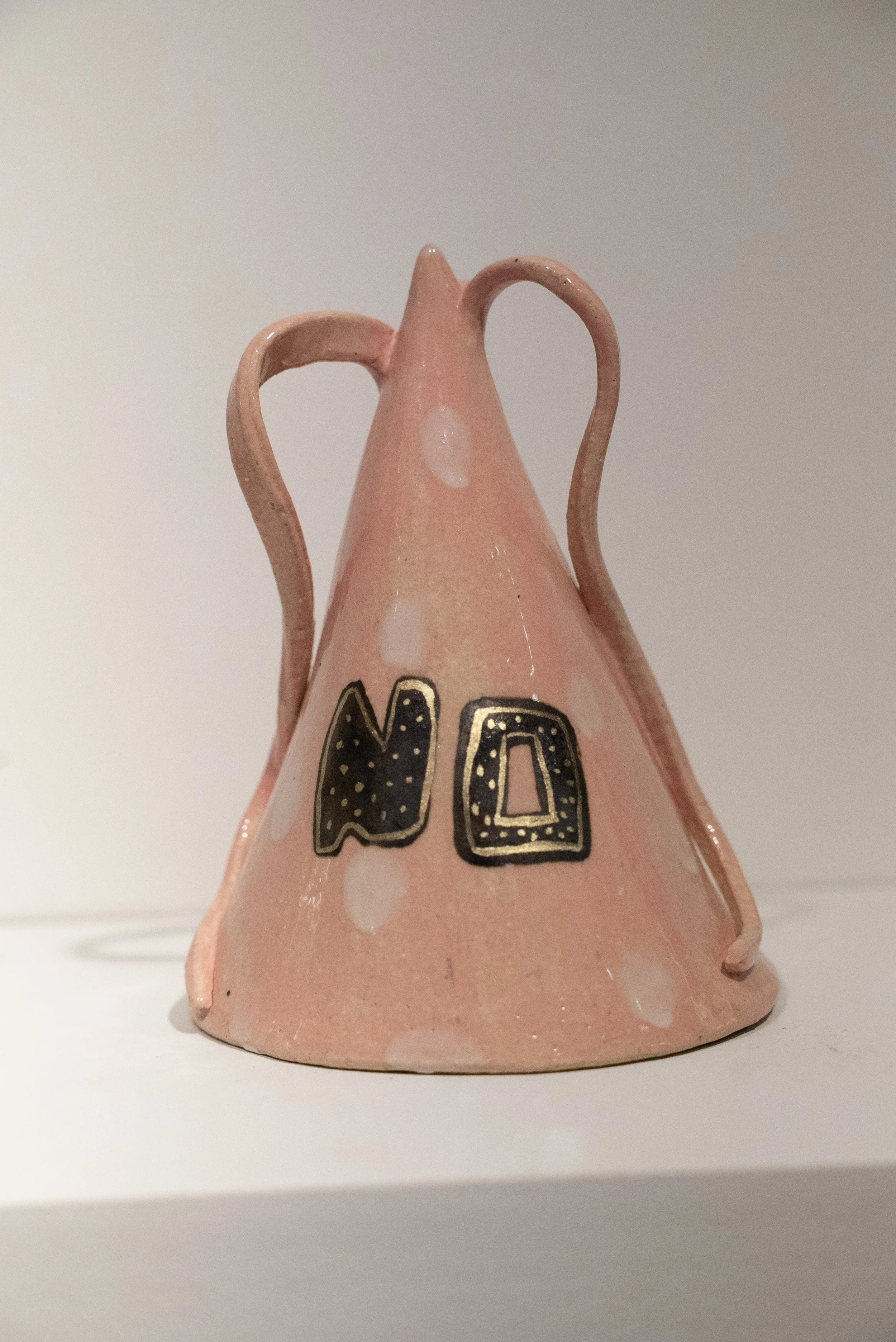
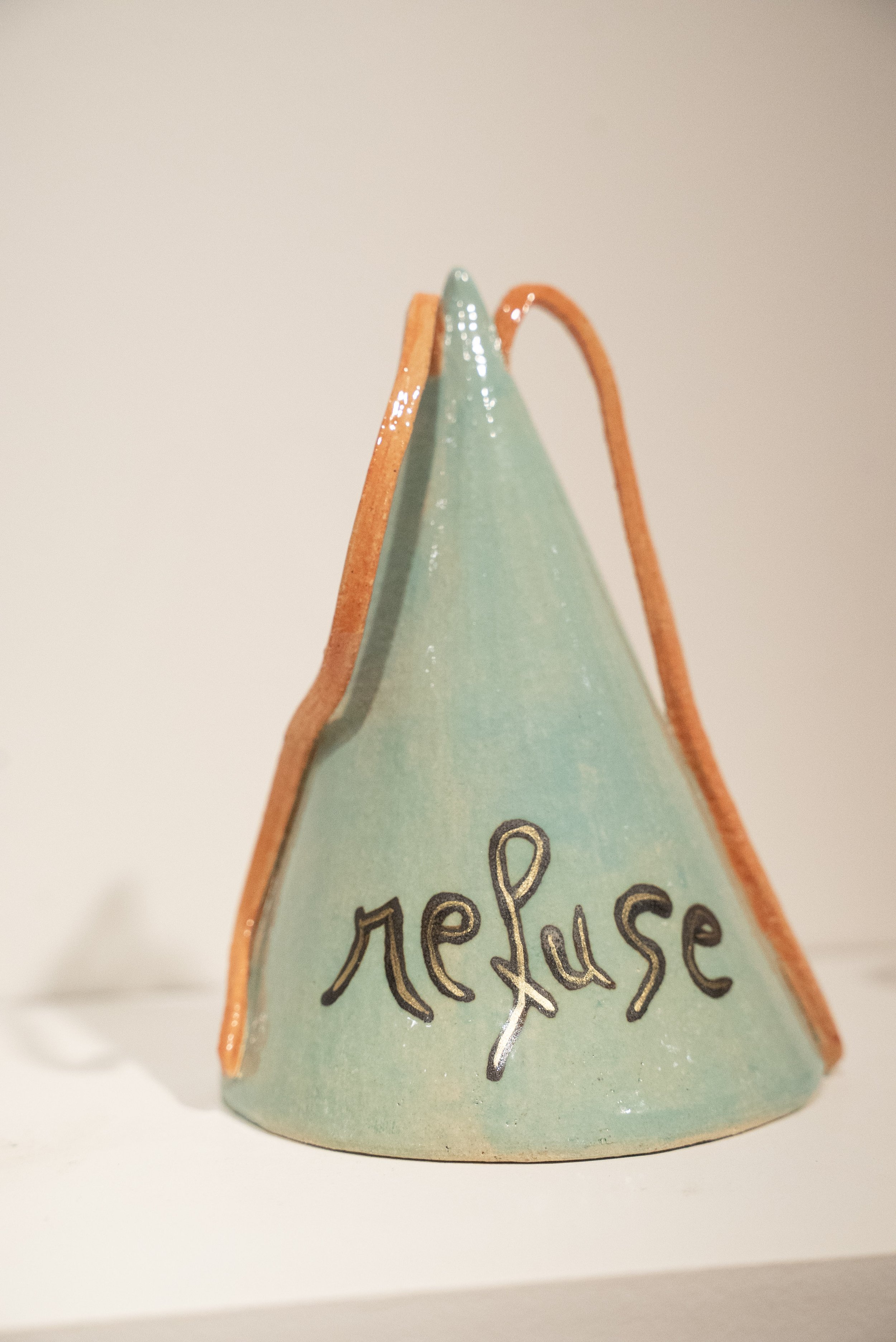
This work, Pietà is something of a pivot point: it contains a more traditional image of a woman that has roots in Mary figure, there’s a critique of the violence associated fossil fuels, the terrifying miracle of weeping oil rather than holy blood, which, given what the actual current situation globally is, feels frighteningly prescient, even more so when you consider how long in the past the weeping statue was constructed: the artist seems to know something, or at least to have for allowed hints of the future to seep into the clay and become resonant with the work. If this sounds a little witchy, it should; witches are the very essence of unruly and subversive. More comedically blatant are a selection of party hats – pointed cones in pastel drag tones that bear slogans like ACAB (2) , dissident, No, refuse, disobey and intifada (3) . Here, dissent and mockery are literally celebrated, which is essential to the overall project: this stuff is supposed to be fun, as well as being deadly serious, and the project of focussed unruliness is bought into sharp view. Let’s party. Smashing the patriarchy should probably be quite the shindig (4) .
The exhibition Malice, Tribology or the Joy of shooting back does seem to cumulate in a party. Edith summoned a coven, and in a glorious performative ritual of angered exhibitionism, the collective mooned (5) , baring their bottoms to communicate anger, to project disgrace and shame back at any and all targets of derision. This collection of women are all masked as animals – suggestive of paganism – but they also have hidden identities and individuality to become a powerful group. While the bare bums are comedic, at this level there is also threat and certainly unbridled anger: it is the body which radiates the roaring anger, and it is no one body; Edith has submerged herself into this motley crew, and all the matters is how the rage and desire to communicate disgust and rejection is made more potent. One bare arse could have been a joke, but this collection feels like a riot: Rowdy, wild, unkempt, disobedient, infuriated, ungoverned, loud, wilful, boisterous, belligerent, untamed, wayward, violent, unmanageable, quarrelsome,
UNRULY.
by Andrew Harper
——————————————
(1) While cheerleading arson is probably not the correct response, it is noteworthy that burning out stolen cars is an act of defiance performed by often completely disenfranchised young people who, somewhat unknowingly attack and destroy the ultimate symbol of consumer capitalism. This is probably not a considered political act, but people with no power at all find ways to push back, and let us note something: your disapproval barely matters to people who not only have nothing now, and nothing to look forward to.
(2) All Coppers are Bastards is the version I recall
(3) A particularly contested word; The Dictionary of Modern Written Arabic gives the meaning of intifada as: “to be shaken off, be dusted off; to shake; to shudder, shiver, tremble; to shake off from oneself; to wake up, come to consciousness”, and it can be applied to any uprising anywhere in that context. Of course, it has most come to be associated now with Palestine, but if you examine this, it is also about the politicisation of language itself, which is ultimately a tool of censorship. Australia, over the last two years, has experienced an astonishing, and disturbing expansion of censorious activity, in both the arts and news media. While it is well beyond the scope here to do much more than note this, I would urge anyone to consider this disquieting issue.
(4) I can’t resist another hint of witchery here though: pointy hats are something witches wear, and some pastel examples appear iin Francisco de Goya’s Vuelo de brujas (Witches’ flight, 1798),, which features a trio of floating women who seem to be devouring a man. The women wear hats that are somewhat like the mitres of clergy figures, making the hats subversive and defiant, and while more gore inflected, the relationship between Goya’s witches and Edith’s coven of bare-bummed party animals dies not seem too far-fetched.
(5) Just to really rub this in, there is a ritual called drawing down the moon. This was supposed to allow the Goddess, symbolised by the moon, to enter the body of a high priestess and speak through her. This not really what is going on with Edith Perrenot’s art here, but it did take a group of women to realise this powerful artwork, which does read very much like a cursing of patriarchy anyway.